Showing posts with label Belgian. Show all posts

Saturday, October 30, 2010

Chicons au gratin


There's something about chilly weather that demands a nice gratin—that piping-hot, cheesy, gooey goodness is just the thing to warm your body and soul on a mid-Autumn evening. And here is one that is sure to satisfy: another Belgian classic, chicons au gratin, also known in France as endives au gratin. It consists of Belgian endives, braised in butter, wrapped in ham slices and covered with a rich mornay sauce before getting browned in the oven. (I get hungry all over again thinking about it!)

Ingredients (for 4 servings)

4 medium-sized Belgian endives
30g (2-3 tablespoons) butter (plus a bit more to butter the baking pan)
Salt and pepper
500ml (2 cups) of béchamel sauce (see recipe here)
200g gruyère (or other good, meltable Swiss cheese), shredded
4 slices of best-quality cooked ham 

Directions

Begin by removing any discolored leaves from the endive and trimming the root end. Place the endives in a sauté pan with the butter and a glassful of water. Season with salt and pepper.
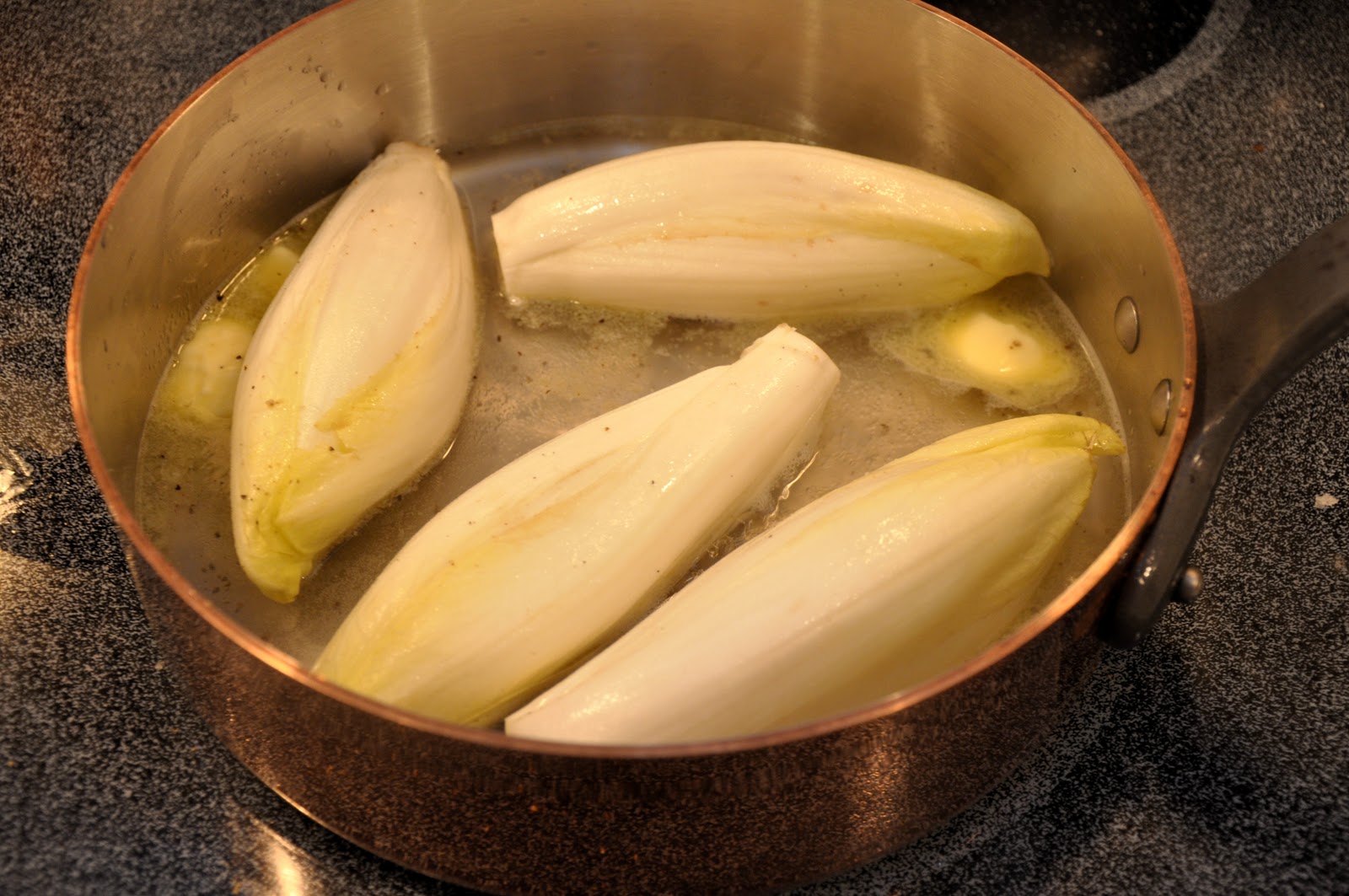

Allow the endives to simmer, covered, until they are quite soft, about 20-30 minutes. If you like, you can let them go longer, allowing them to turn a nice golden brown. Either way, drain the endives, root ends up, so that any excess water will drain off. (You may be tempted to skip this step, but don't—otherwise, you may wind up with soggy vegetables and a runny sauce!)
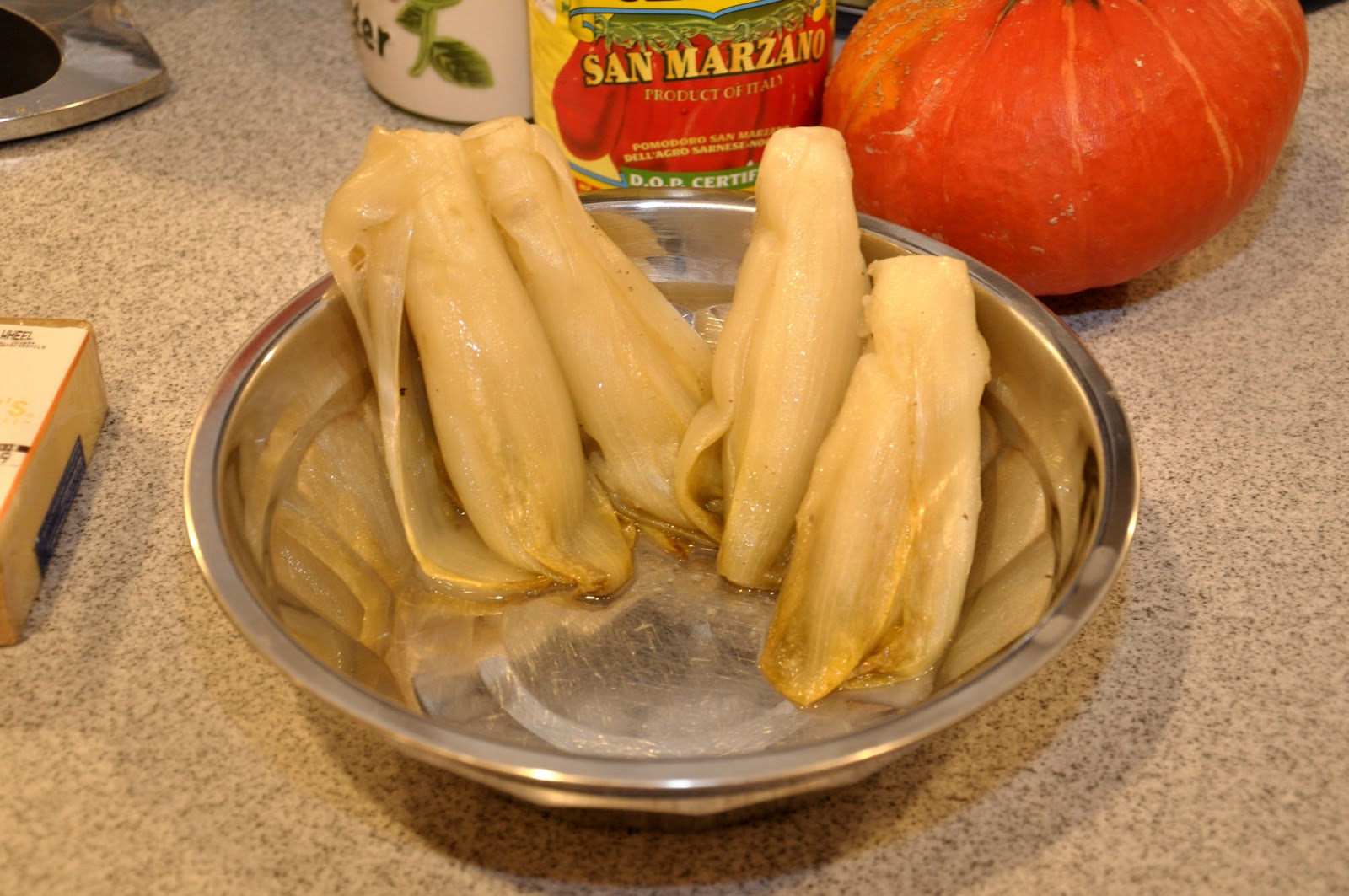


While your endives are braising, make your béchamel sauce in the usual way, and when it is done, add the gruyère, holding back about a third, however, for later. For extra flavor,  you can add some of any cooking liquid left over from the braising or draining of the endives. (This sort of béchamel with cheese is called a sauce mornay.)

When your endives are well drained, take them one by one, and place them on one of the ham slices, then roll the slice around the endive, covering it completely.
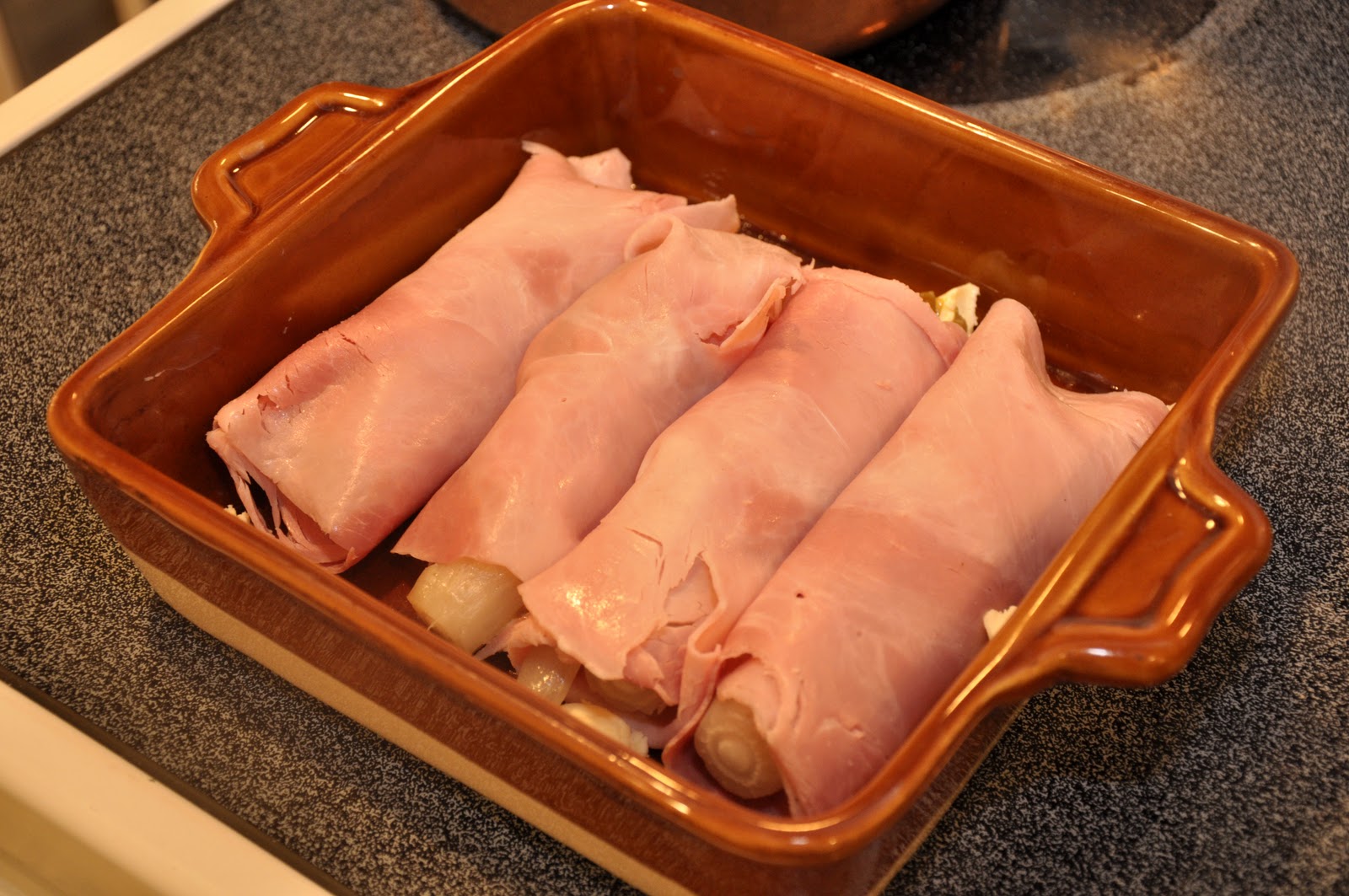


Butter a baking dish just large enough to contain your endives. Arrange them neatly in the dish, then pour over the mornay sauce. Cover the dish with the remaining cheese. Dot the top with some additional bits of butter.
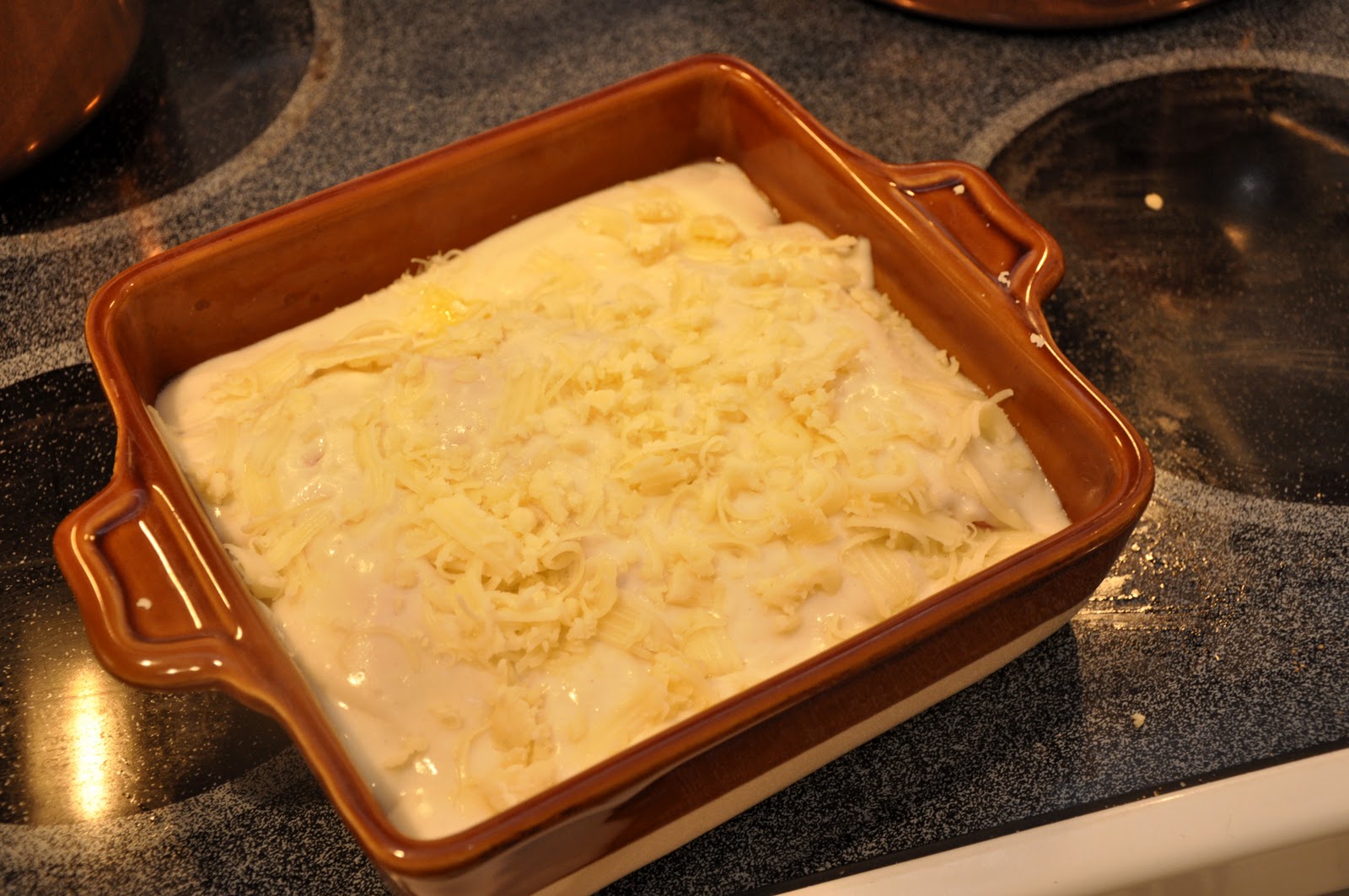


Bake the dish in a hot oven (200C/400F) for about 30 minutes, or until the top is nicely browned and the sauce is bubbling hot. Let the dish cool off for a few minutes before serving.

NOTES: The success of this simple dish will rely heavily on the quality of its ingredients. Besides the endives themselves, which should be fresh, of course, and ideally free of any green leaves, you want to use the best quality ham and cheese you can afford. If you use packaged ham slices and supermarket 'Swiss cheese', you will wind up with something tasty enough but pretty pedestrian. Use real, good ham and true gruyère and you will have something very special indeed.

You can save some time by simply parboiling or, better yet, steaming the endives in lieu of braising. Many if  not most recipes call for it, in fact, and it takes only about 10-15 minutes. But I find that braising in butter makes a subtle but significant difference in taste and texture. And, not to nag, but  let me repeat: draining the endives any excess liquid is perhaps the single most important 'trick' to success, so don't forget!

This dish can be served on its own as a hefty starter. As a main course, it is often accompanied by potatoes, being Belgian, some pommes frites would be an obvious choice, although I find they go very nicely with either mashed or even just plain steamed potatoes which are delicious dipped in that mornay sauce....

Monday, October 11, 2010

Carbonnade à la flamande


Today is Columbus Day so, of course, I decided I would make a Belgian meal… ;) One of my favorite Belgian dishes is carbonnade, a wonderfully deep-flavored dish of beef braised in onions and beer. It is simple but satisfying, just the kind of cooking and eating that I like best, especially as the temperatures cool.

Start by cutting up some good stewing beef—I prefer chuck—into serving pieces, either cubes or (as the older recipes call for) small, thick slices. Brown each piece well in lard (or butter) and set aside. In the same skillet, sauté lots of onions, about half as much as you have beef by weight (or even more if you like onions) until they have softened.


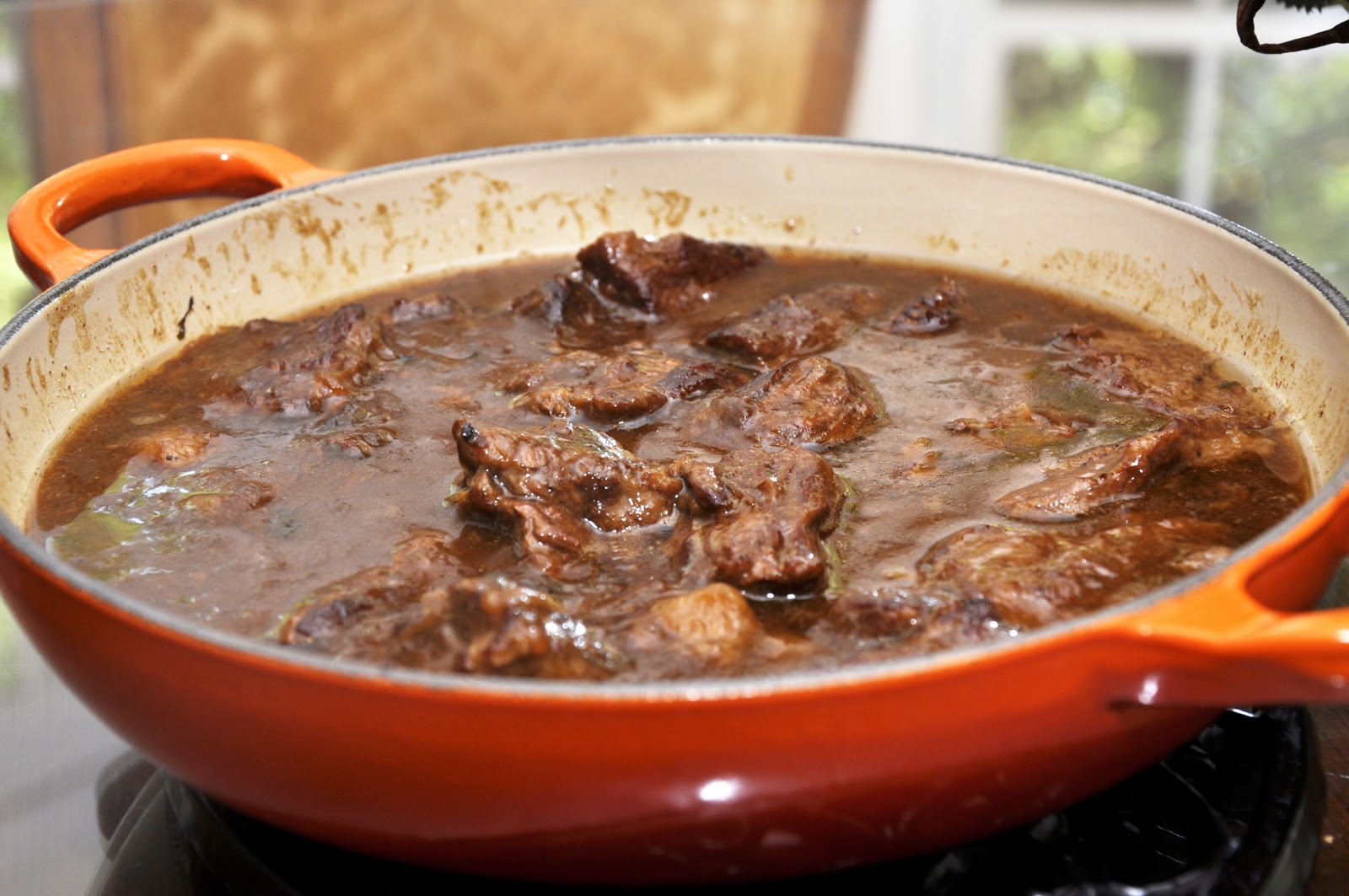
Now layer a Dutch oven or braiser with half the beef, then half the onions. Season well with salt and pepper. Repeat with the rest of the beef and onions. Then take a ladleful of good, strong beef stock and deglaze the skillet in which you browned the beef and onions, and pour it into the pot. Top off with some good beer or ale—preferably Belgian ale, of course—enough to cover the beef completely. Nestle a bouquet garni, made with a bay leaf, a spring of fresh thyme and a sprig of parsley, among the beef pieces. Most recipes also call for adding a pinch of brown sugar at this point, just enough to balance some of the bitterness of the beer but not enough to add any actual sweetness to the dish.


Bring the pot to a simmer on top of the stove, cover, and place in a moderate oven (180°C, 350°F) to braise for 2-1/2 or 3 hours, until the beef is fork tender. (The dish can be made ahead up to this point.)


A few minutes before serving, remove the pot from the oven and, keeping at a slow simmer on top of the stove, thicken the sauce with a slurry of corn starch and water, together with just a few drops of vinegar, if you like. (Again, not too much—just enough to add a tiny bit of 'zip' but not so much that you can actually taste any sourness.) Let the dish simmer for a few minutes and serve hot, accompanied by pommes frites, mashed or steamed potatoes or buttered noodles.


NOTES: As with many classic dishes, you will find many variations of carbonnade à la flamande. Not all recipes calls for the final fillip of vinegar, some call for a dollop of mustard. Some versions will have you add some lardons at the start, some add mushrooms—at which point the dish begins to resemble a boeuf bourguignon made with beer rather than red wine. The herbs and spices that go into the bouquet garni can vary; personally, I like adding a few cloves, while some recipes call for some allspice or nutmeg. And some recipes thicken the dish not with cornstarch but a beurre manié or—believe it or not—with some gingerbread (pain d'épices) that is either crumbled or placed on top of the beef to braise along with it. Of course, as the dish cooks the gingerbread breaks up and melts into the braising liquid, providing a nice liaison and an old-fashioned flavor.


One crucial choice will be, of course, the beer or ale, which can really transform the character of the dish. Needless to say, a good Belgian ale, perhaps of the Lambic or Trappist variety, would really be the best choice. But any beer or ale with good character, particularly amber ales, will work. (So will your average lager in a pinch, but the dish will inevitably lack some 'oomph'.) If you want a really interesting taste, you can do what the Irish do and use stout, I which case (if you add some carrots along with the onions) you will be making a typical Irish dish called Beef in Guinness.


I am not sure of the origins of carbonnade—the word actually refers to cooking over coals—but it is surely very, very old. Some of the older variations that call for spices like nutmeg, the use of bread as a thickener and the sweet-and-sour flavoring (I suspect the vinegar was probably originally verjuice) are all quite typical of Medieval European cuisine.

Pommes frites


Deep fried potatoes, which in the US usually go by the misnomer "French fries", have suffered from association with fast food and the modern aversion to deep fried foods in general, but a well-made batch of pommes frites is one of the tastiest ways to prepare potatoes. And while they will never qualify as health food, if made properly and eaten in moderation, they fit perfectly well in a well-balanced diet.


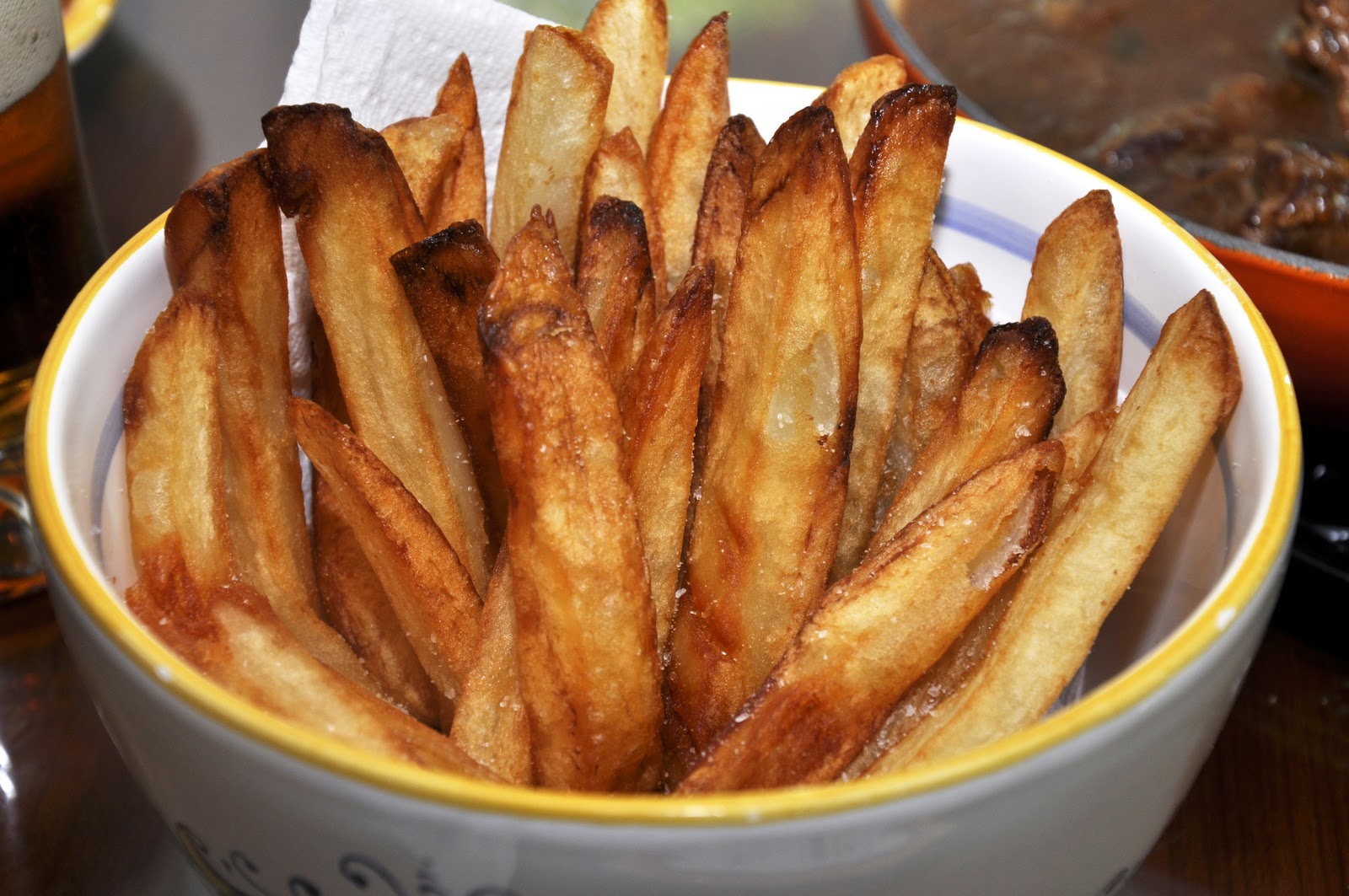
Fried potatoes are, quite simply, just that: potatoes deep fried in fat. But as simple as the recipe is, there are a few 'tricks' to ensure that they come out at their best. Begin by peeling and cutting your potatoes into sticks. At home, it is easier to cut them fairly thick (as pictured) but if you have the patience, pencil-thin fries are quite delicious. As you go, immerse the pieces in bowl of cold water so they won't discolor.


I have already discussed the most important tips for successful frying, and the same rules go for fried potatoes. But there are a few extra tips to keep in mind when frying potatoes. You see, potatoes are both hard and starchy, two qualities that you will need to account for as you fry them. Since they are hard, they need to cook for some time to soften, but because they are starchy, they brown rapidly in hot oil. What's the solution? Frying the potato in two goes, or 'double frying': first in moderately hot oil (350°F or 180°C), for 3-5 minutes (depending on their thickness) until just tender, then for another 3-4 minutes in really hot oil (375°F, 190°C) to brown them up nicely. If done right, this technique results in fries that are nice and soft on the inside and brown and crispy on the outside.


The other 'tricks' aim to avoid greasiness. Make sure to fry your potato pieces in small batches, with plenty of room for the oil to encase each piece and seal it. This also helps maintains a more constant temperature—as with any deep frying, you want to avoid allowing the temperature of the oil to drop too much or the oil will be absorbed more readily into the food you are frying. After each round of frying, pat the potato pieces dry of any excess oil, gingerly so you don't crush them—or burn your fingers on the hot oil—and keep them on a grate in a warm oven while you continue frying the other batches. (The grate lets air circulate around the top and bottom, which helps keep them crisp.)


Once all your potato pieces are nicely fried to a golden brown, sprinkle them generously with salt and serve immediately. If you need to, you can hold them on a grate in a warm oven for a few minutes—but not too long—but if you do, only salt them just before serving or they may go soggy.


NOTES: Even though they are very much in vogue these days, better not to use those young yellow-fleshed, thin-skinned potatoes that you would use for a sauté, potato salad or gratin, but rather use the larger, starchy kind that you would use for mashed potatoes. The starch helps the fries to brown as they should while getting soft and creamy inside. In North America, Idaho or Russet potatoes work well, as do so called 'all purpose' potatoes. I read that Yukon Golds also have a following, although I have not tried them made this way.


You can cut potatoes either thinly or thickly. In France, thick-cut fries are called "pommes Pont-Neuf"[or simply "pommes frites", about 10 millimeters (3/8 inch), while "pommes allumettes" (matchstick potatoes) are cut about 7 millimeters (1/4 inch) thick and "pommes pailles" (potato straws) only about 3–4 millimeters (⅛ inch). The very thinnest French fries do not need the double fry technique, but cutting them that finely can be very fussy for home cooks.


The other crucial choice for this dish is the fat in which you fry the potato. Most people will use a light vegetable oil. Peanut oil works well, given its high smoking point. Lard is wonderful for deep frying—it ensures crispiness and adds flavor—and personally I like to use a combination of canola or peanut oil mixed with a bit of lard. But just make sure to use good-quality, true lard made from rendered fat back. Supermarket lard is generally hydrogenated and contains those harmful trans fats. One oil you should not use is olive oil, as it has a low smoking point, as well as rather strong flavor that is not characteristic of this dish.


And now, since a (moving) picture is worth a thousand words, you may want to check out this instructional video from our friends at the Rouxbe Online Cooking School:


As many readers will know, "French fries" are not actually French but Belgian. It seems that this misnomer began with American soldiers fighting in Belgium in the First World War. They tasted Belgian pommes frites and called them "French" since that was the official language of their Belgian army colleagues. Or perhaps they didn't realize that they weren't in France… In any event, today fried potatoes are, of course, popular all over the Western world. Made in slices rather than sticks, they become 'chips' in Britain and many other English speaking countries. In French speaking Canada they are doused with gravy and cheese curds to make the Québecois classic called poutine. And, of course, in the US they are ubiquitous, accounting for fully a quarter of the total vegetable consumption in the country, most of them, unfortunately, consumed in fast food outlets, although there has recently been a movement by fast food chains to make them healthier by using fats like canola oil that are free of trans fat. But no matter what, making and eating them at home has to be better for you and your loved ones.

Saturday, February 13, 2010

Risotto all’indivia belga


Risotto is one of my 'go to' dishes when I don't feel like cooking anything elaborate. That may sound odd: risotto has a reputation for being a lot of work and easy to get wrong. And yes, when done badly, risotto can be a rather goopy mess. But it is not really very hard to learn the right technique and, if you use a pressure cooker, it takes no time at all to make. And one of my favorite winter vegetables, Belgian endive, makes one of my favorite winter risotti. In my version, its slight bitterness is balanced by the sweetness of butter and cream, and enhanced by the savory of freshly grated parmesan cheese. It's a nice, elegant choice for a Valentine's Day candle-light dinner. 

After sweating some thinly sliced onion in butter and a bit of oil over gentle heat, add Belgian endive that has been trimmed, sliced down the middle and then thinly sliced across to produce a kind of chiffonade. Mix well and cover, allow the endive to braise with the onions until they are well reduced and have absorbed the flavors of the onion and butter. Do not allow them to brown.

Uncover and raise the heat a bit, add your rice (see below) and proceed in the usual fashion for making a risotto, lightly 'toasting' the rice, then bathing it with a splash white wine and then adding a rich, home-made broth, one ladleful at a time, until the rice is just al dente. (If using a pressure cooker, add all the broth all at once.) Add a bit of cream just before the rice is done, then, off heat, proceed to mantecare with grated parmesan cheese and, if you want a really rich dish, a dab of sweet butter. 

NOTES: Instructions for making risotto, both the old-fashioned way and in a pressure cooker, can be found in this post. 

While I used to use Arborio rice in the past for making risotto, just because it's the easiest to find and also the least expensive of the three types of rice that lend themselves to a risotto treatment, I recently splurged and bought some vialone nano rice and was instantly converted! It has the incredible ability to absorb flavor—and that is, of course, what the risotto technique is all about—while not losing its texture. And it produces a creamy, but never stodgy, risotto every time. I highly recommend it. Vialone nano is a bit shorter than Arborio, almost round in fact. It is typical of the Veneto and recommended for risotti mantecati, less appropriate for soups. 

The use of cream in risotti is not all that common—some even consider it taboo—and I am not keep on adding it too aggressively or too often. But in this dish, it works very well and, as I said, helps to balance out the bitterness of the indivia belga. I also like to use cream in a few other risotti, including ones made with radicchio, zucca and spinach, all vegetables that have a natural affinity for dairy products.

Sunday, November 8, 2009

Moules au curry


Here's a wonderfully rich but yet light supper dish—steamed mussels in a curry cream sauce—from Belgium, the world capital of mussel dishes. With a crusty baguette to sop up the delicious sauce, you have a one-way ticket to culinary nirvana.

Begin by lightly sautéing chopped shallot and parsley in butter (or butter mixed with some olive oil), sprinkle this soffritto with a bit of cayenne pepper (not too much, just enough to give the dish a little 'kick') then pour over a cup or so of white wine. Allow to simmer for a few minutes, then add your mussels, in their shells. Cover and allow the mussels to steam until they open, then transfer the mussels with a slotted spoon to a heated serving vessel (I find that an enameled cast-iron soup pot is ideal) and keep warm while you make the sauce.

Allow the juices in the pot to reduce for a minute or two over high heat, then add a good pour heavy cream and sweet curry powder (or curry paste if you have it) to taste. Allow to reduce to a saucy consistency and pour over the mussels. Sprinkle with a bit more chopped parsley and serve immediately.

As for measurements, I find that 500g or a pound of unshelled mussels is about right for someone with a healthy appetite, if you are serving this as the main course of a light supper. As a starter, count on half of that. For each serving of mussels, use one small shallot and a sprig of parsley for the soffritto, and a small glassful each of wine and cream. The amounts of cayenne and curry are a matter of taste, but I'd add a small spoonful or the cayenne and several good shakes of curry. But exact measures here, as for so many dishes, are not that important. Your judgment and experience are your best guides.


NOTES: Try to find smallish mussels, which have more delicate taste and texture. These days mussels are raised in 'mussel parks' rather than collected on the shore so that they carry very little (if any) sand, but if you have any doubts about it, you can soak them in water for about an hour before cooking. Check the juices after you have removed the steamed mussels from the pot; if you see any sand, then strain the juices through cheese cloth before proceeding. Mussels also used to come with 'beards'—those threads that the mussel used to attach itself to whatever it was growing on. These days mussels are also sold de-bearded but if not, the beard needs to be removed.

The dish is not really meant to be 'hot' but simply savory. The curry should be of the 'sweet' variety and the cayenne used with discretion. But there is something about the combination of sweet—from the cream and shallots—and savory from the curry that is just exquisite. Do try it some time.

If you omit the cream and curry, this dish becomes the classic moules marinières. Mussels steamed this way is the departure point for an incredible variety of variations, with tomatoes, saffron, fennel... and many other variations on the theme. In Belgium, steamed mussels are often paired with French fries (which are really Belgian, not French, in origin, by the way) and washed down with a good beer. Italians also make steamed mussels; if you want to try one example, see my recipe for a sauté di cozze.