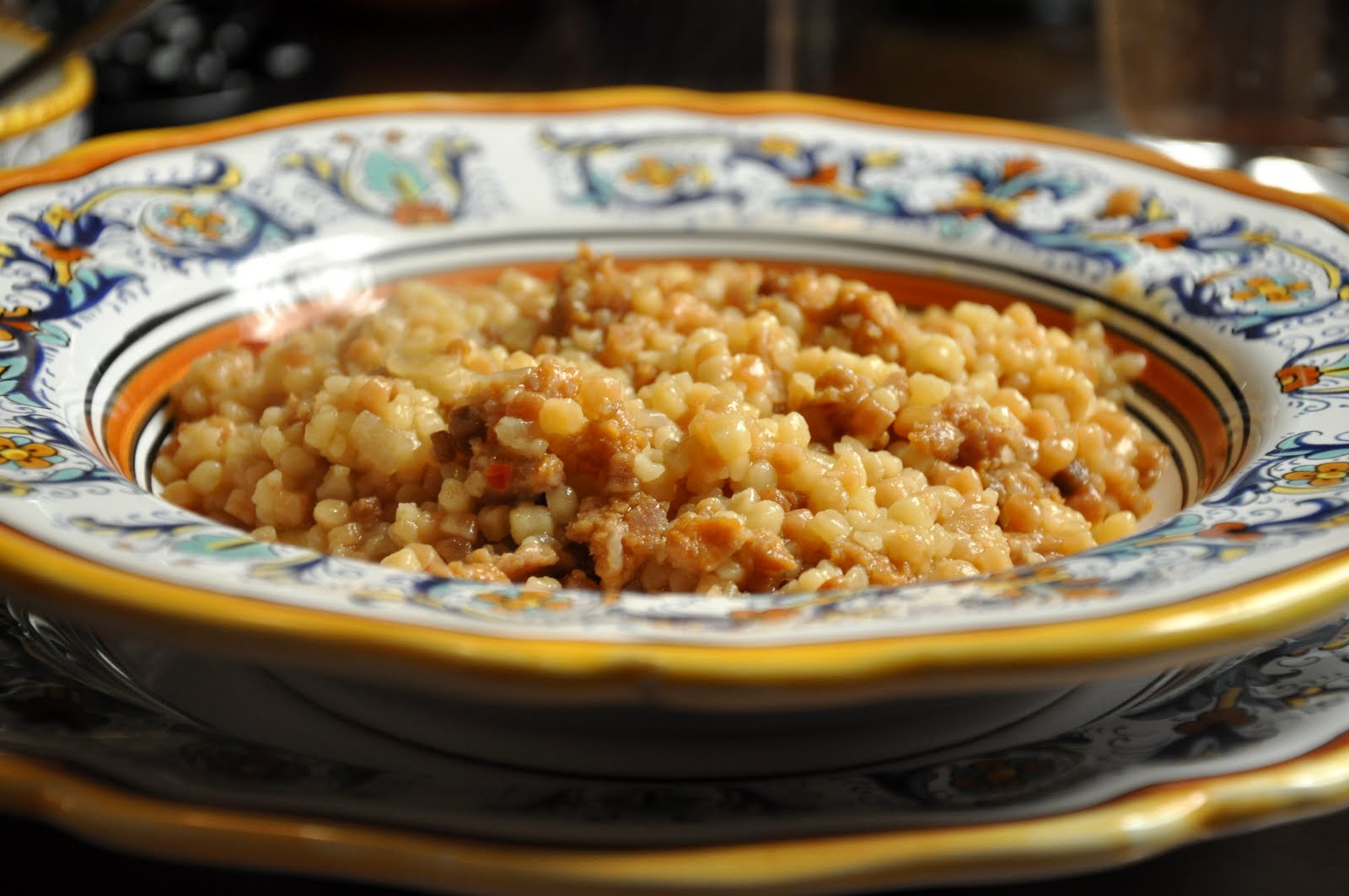
Maloreddus are a kind of pasta typical of the island region of Sardinia. Also called gnocchetti sardi or 'little Sardinian gnocchi' after their dumpling-like shape, maloreddus are made from durum wheat flour, water, salt and—a very Sardinian touch—a pinch of ground saffron. They lend themselves to a variety of sauces but perhaps my personal favorite way to make them is alla campidanese—with an utterly simple but delicious sausage and tomato sauce that is vaguely reminiscent both of the Roman amatricana and the Neapolitan ragù.
Ingredients (for 4-6 servings)
400g (14 oz.) maloreddus
For the sauce:
200g (7 oz.) mild Italian sausage meat
Olive oil
1 garlic clove
400g (14 oz.) best-quality canned tomatoes
1 tablespoon tomato paste
1 large or 2 small bay leaves
A few fresh basil leaves (optional)
A pinch of saffron threads, ground in a mortar
Salt and pepper to taste
To finish:
100g (3-1/2 oz.) of freshly grated pecorino cheese (preferably Sardinian)
Directions
Remove the sausage meat from its casings and crumble the meat into a skillet with a healthy drizzle of olive oil. Allow the meat to brown lightly, breaking up the sausage meat into even smaller bits with a wooden spoon as it browns. Remove the sausage meat with a slotted spoon.
In the fat remaining in the skillet, sauté the garlic clove, which you will have slightly crushed with the side of a knife, just until it begins to give off its aroma. Immediately add the canned tomatoes, with your hands, crushing them between your fingers as they go in. Add the rest of the sauce ingredients and let the sauce simmer until it thickens nicely, about 15-20 minutes.
Meanwhile, boil the maloreddus in abundant, well-salted water until al dente, usually about 12 minutes. Drain and add your pasta directly into the skillet and toss it all together. Add the grated pecorino and serve immediately, with more pecorino on the side for those who want some.
NOTES: Maloreddus are actually fairly easy to make, certainly no harder than, say regular gnocchi. You mix your dough in the usual way, using a glassful of teipd water for 400g of flour, a pinch of salt and a pinch of ground saffron. Taking a handful of the dough at a time, roll it out as you would for potato gnocchi into 'cords' but rather thinner, about the circumference of a pencil. Cut the rope at 2cm (1/2-inch) intervals and then roll the pieces using the back of your thumb, against the prongs of a fork or a gnocchi board, to create a small, ridge-backed shell-like gnocco. If you use ground saffron, your maloreddus will have a lovely golden color almost like egg pasta. But you can omit the saffron if you prefer, which is how most factory maloreddus is made.
If you can't find maloreddus in the store and don't have the time or inclination to make your own, the same sauce is perfectly delicious with more conventional stubby pastas like pennette.