Showing posts with label buffet. Show all posts

Friday, January 28, 2011

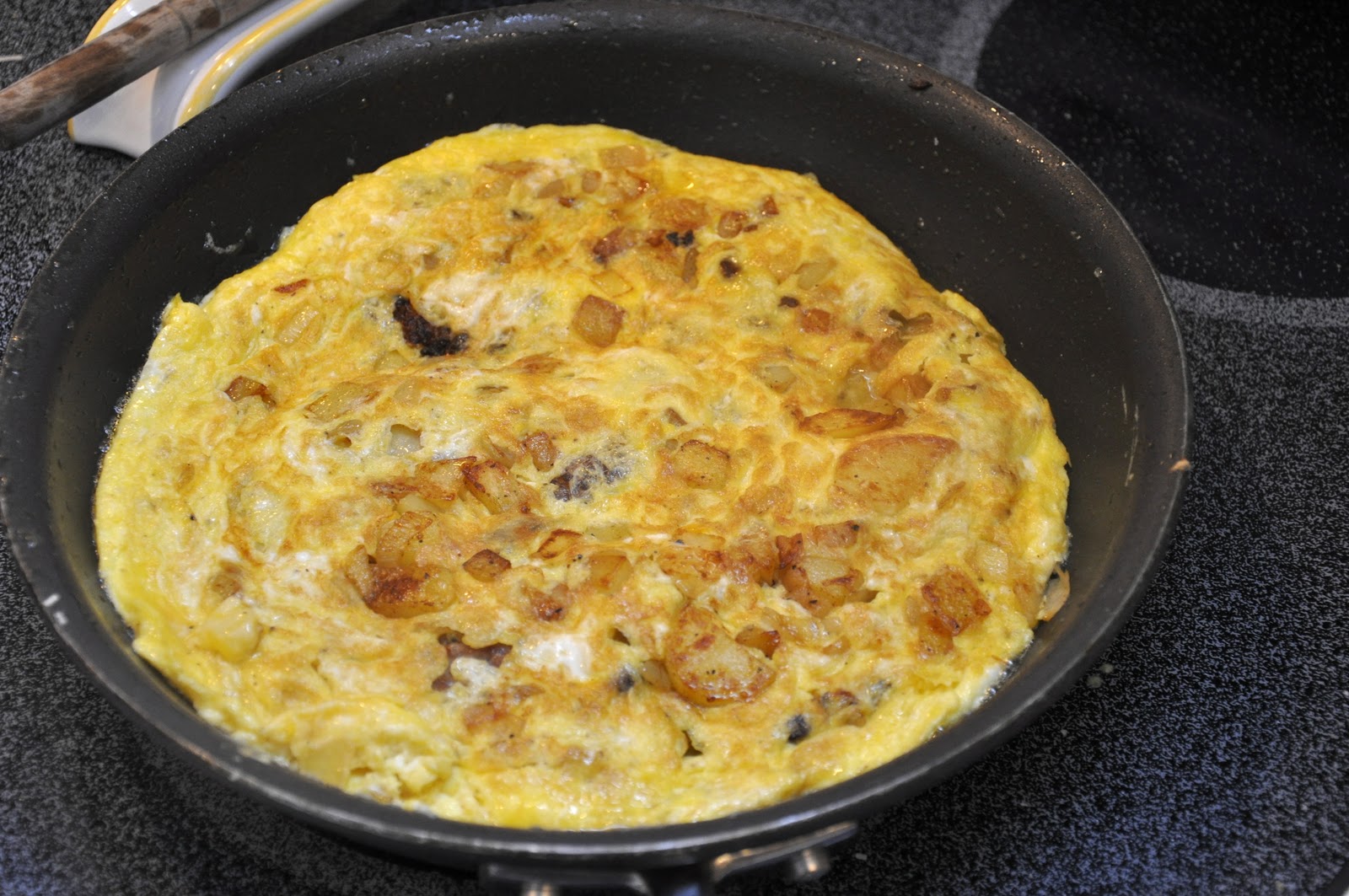
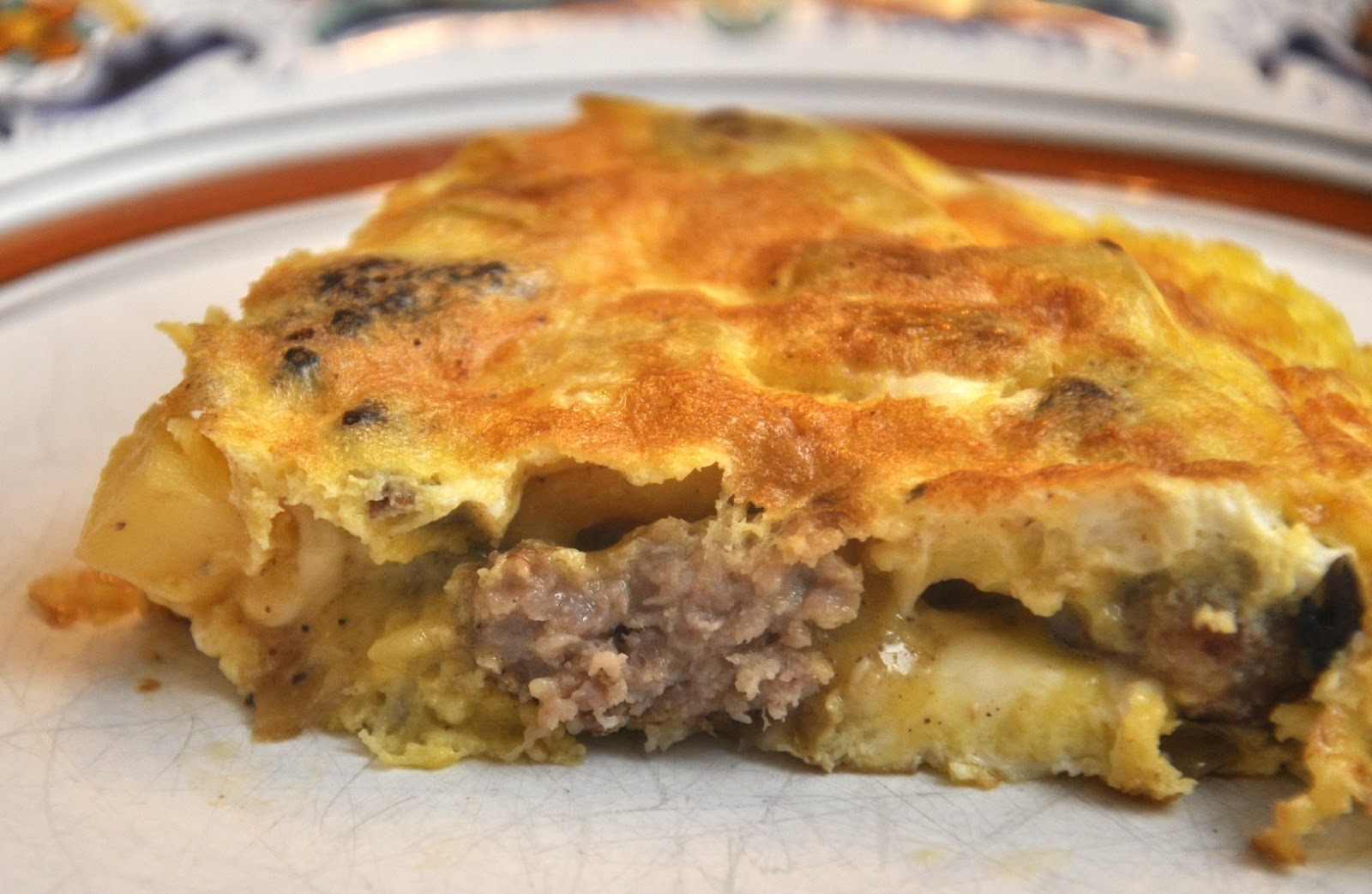
Frittata con patate e salsiccia


One of the wonders of Italian cuisine is its incredible variety, and much of that variety comes from the mix-and-match nature of so many of its dishes. You take a staple base ingredient like rice or pasta, and you pair that with all sorts of flavoring ingredients and come up with literally hundreds of variations on a theme. So pasta or risotto are not a single dish, but a whole category, a whole world of dishes that could literally fill a book, and has.

The same goes for the flat omelette known as the frittata. The combinations are endless, as we have already featured a few on these pages: frittata di patate e cipolla (with potatoes and onion), frittata ai carciofi (with artichokes) and frittata ai peperoni (with bell peppers). Here's another example, one of my favorites on a chilly winter's day when I want something a bit more substantial: a frittata with sausages and potatoes.

Ingredients (to serve 2-3 as a secondo, 4-6 people as an appetizer, snack or part of a buffet)

2-3 sausages, removed from their casings and broken up into smallish pieces
3 medium waxy potatoes, peeled and diced
1/2 onion, sliced or diced
Salt and pepper
6 eggs
100g (3-4 oz) of grated parmesan or pecorino cheese
A few sprigs of fresh parsley, finely chopped (optional)
Olive oil


Directions

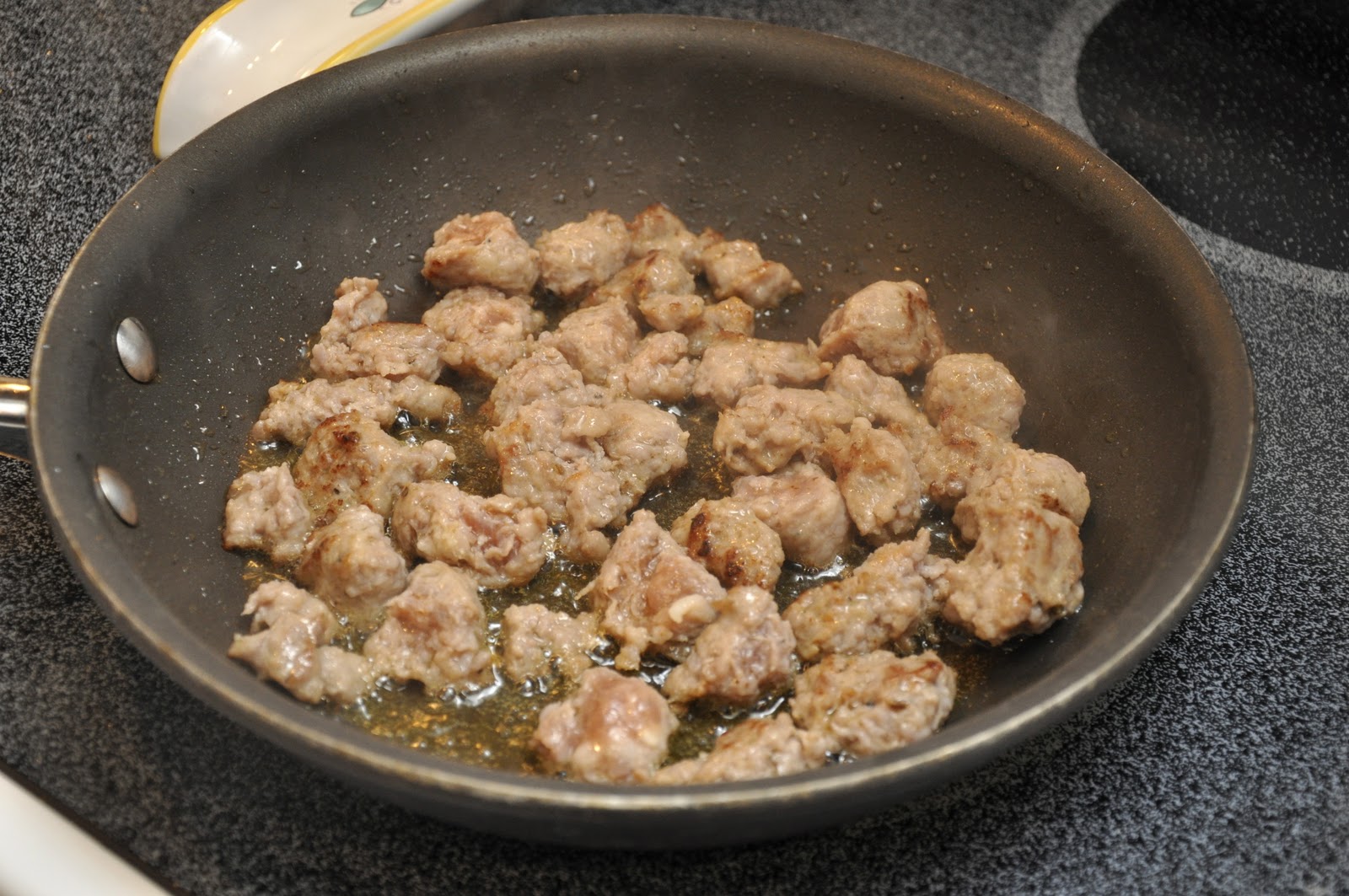
Start by taking a non-stick skillet and sautéing your sausages in a bit of olive oil over moderate heat. When they are nicely browned, you can remove them to prevent them from getting too brown, or just keep them in the pan.

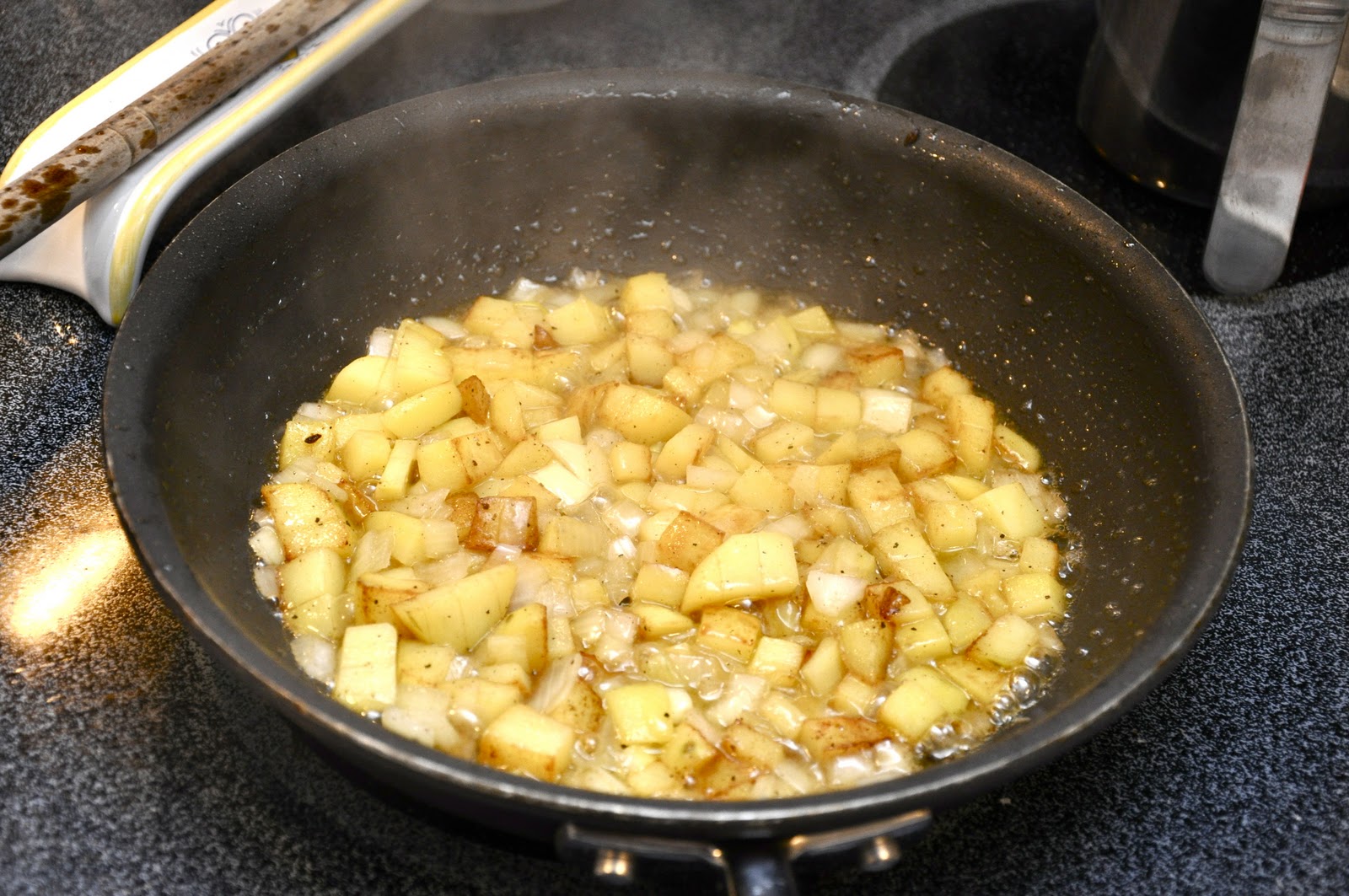
Now add your onion and potato and let them go until they are nice and tender, and not too brown. Season with salt and pepper as they sauté. I find that it helps to add some water and cover the skillet for a few minutes. This speeds up the cooking time and prevents burning.

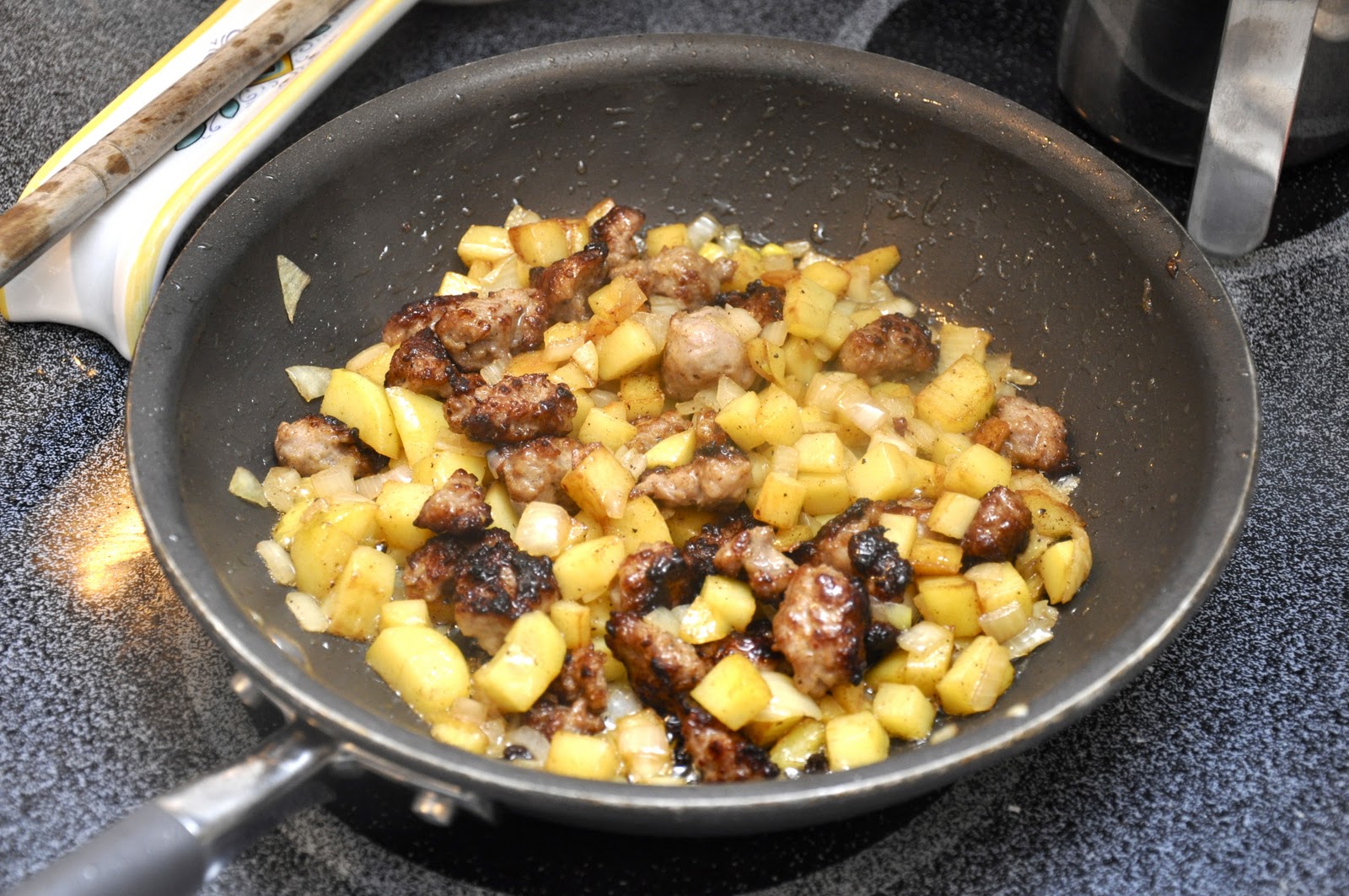
Once the potato and onion mixture is done, add back the sausage pieces if you've removed them. Let them sauté together and get to know one another for a minute or two. If you are using the parsley, now is the time to add it to the mixture.

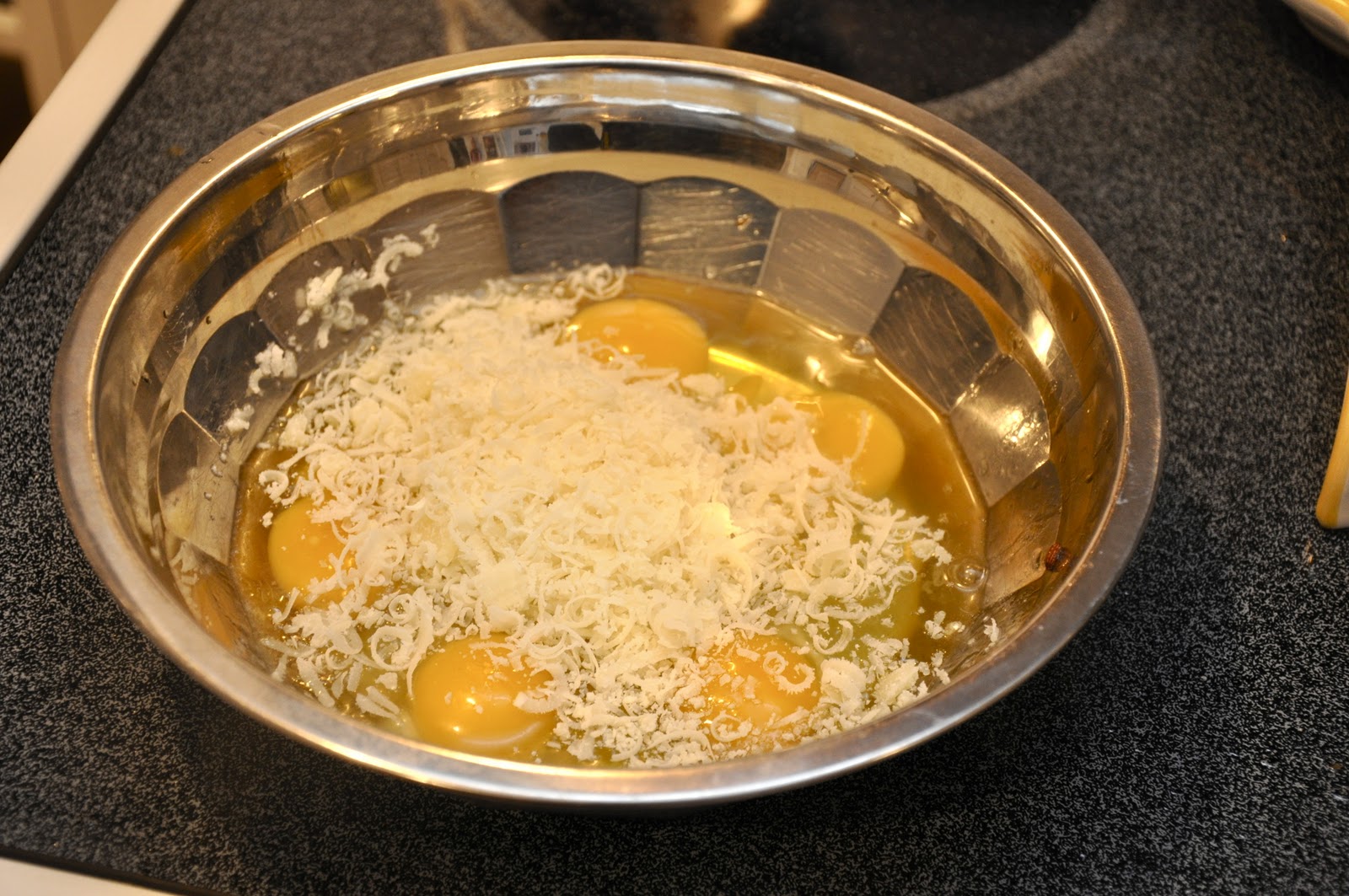
While those ingredients are getting acquainted, beat your eggs and grated cheese together in a bowl. If you are using pecorino, you should not need much salt, but with parmesan you will want to season the eggs a bit.

Pour the egg mixture over the flavoring ingredients in the skillet and mix once with a spatula or wooden spoon.
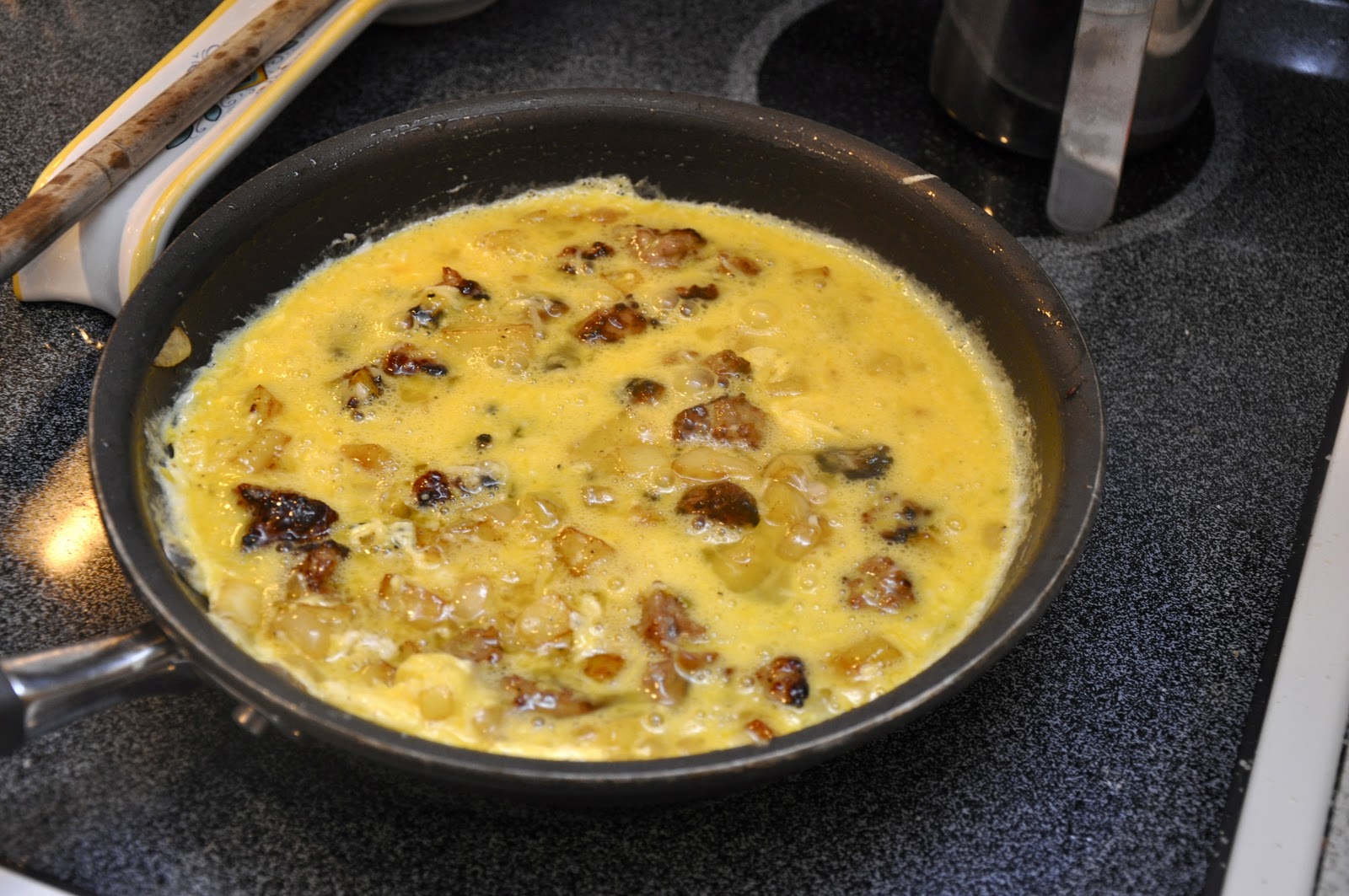

Once the flavoring ingredients are more or less evenly distributed though the eggs, stop and let the eggs cook, still over moderate heat, until they have almost entirely set, except for a thin layer of raw egg on top, and the bottom has nicely browned (but not too much). During this step, too, you can cover the skillet with a lid to help the eggs set. The whole process should not take more than 8-10 minutes. Use a spatula to check the bottom to make sure it's browning nicely but not burning. Regulate the heat if need be.
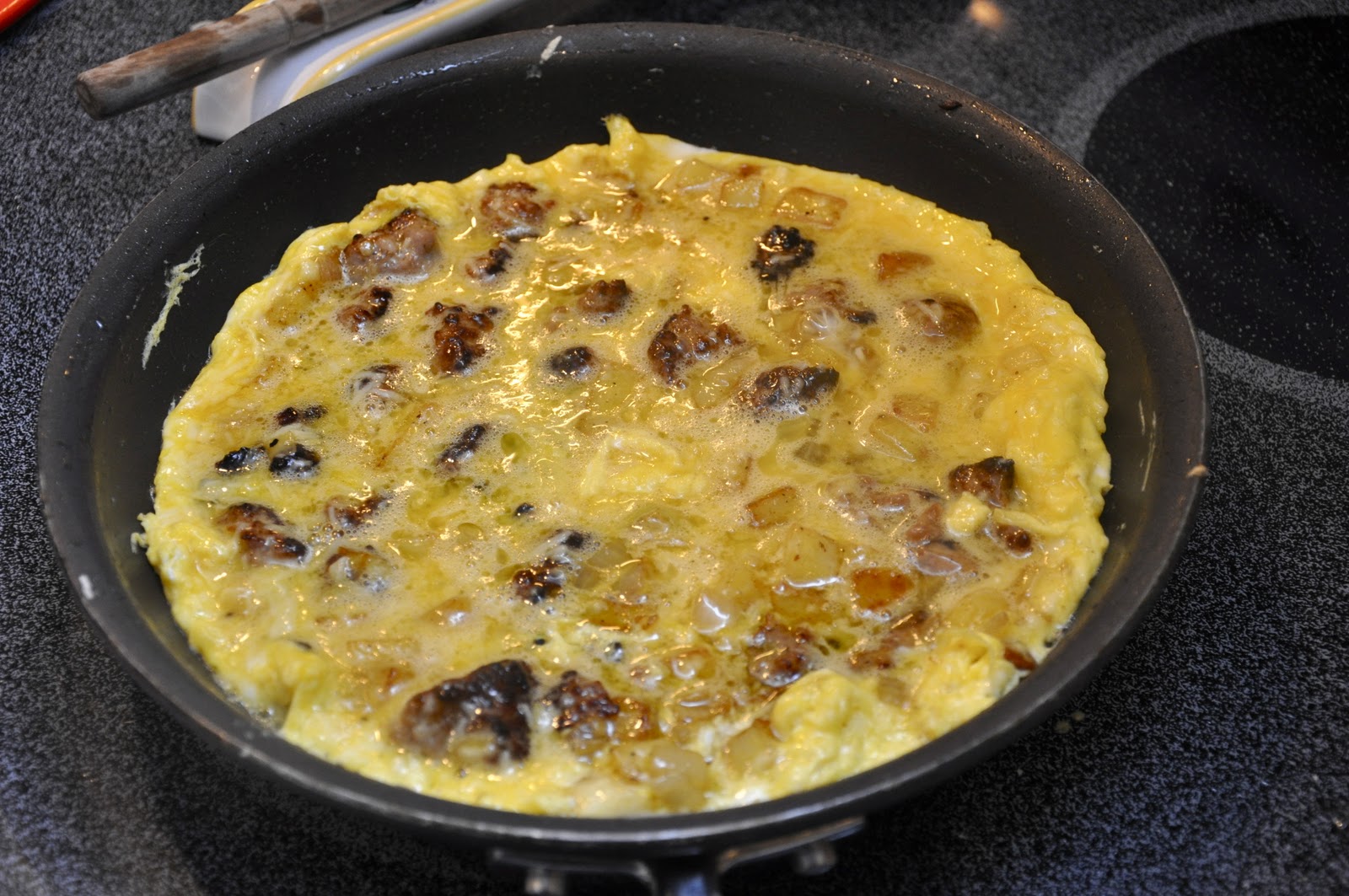

Now comes the tricky part: you need to flip the frittata over. I do this by using two plates. You slip the frittata out, cooked side down, onto a dinner plate. Then top that plate with another, and flip the two plates over, so that the frittata is now upside down, with the runny, uncooked side facing up.

Add a little more olive oil into the empty skillet, then slide the frittata back into the skillet. You will now want to let the runny side cook. This will take a lot less time than before, as you eggs should have already almost completely set, perhaps 3-5 minutes more. Again, check the bottom by raising a bit of the omelette with a spatula and take a peek underneath. It may look a bit misshapen at this point, but not to worry, all will be well in the end.


When the frittata is done, slide it out onto a dinner plate again. I find that the last-cooked side is the most attractive, so once again, I use another plate and flip it over onto its 'pretty' side. Let it cool for a few minutes and serve, cut into wedges.

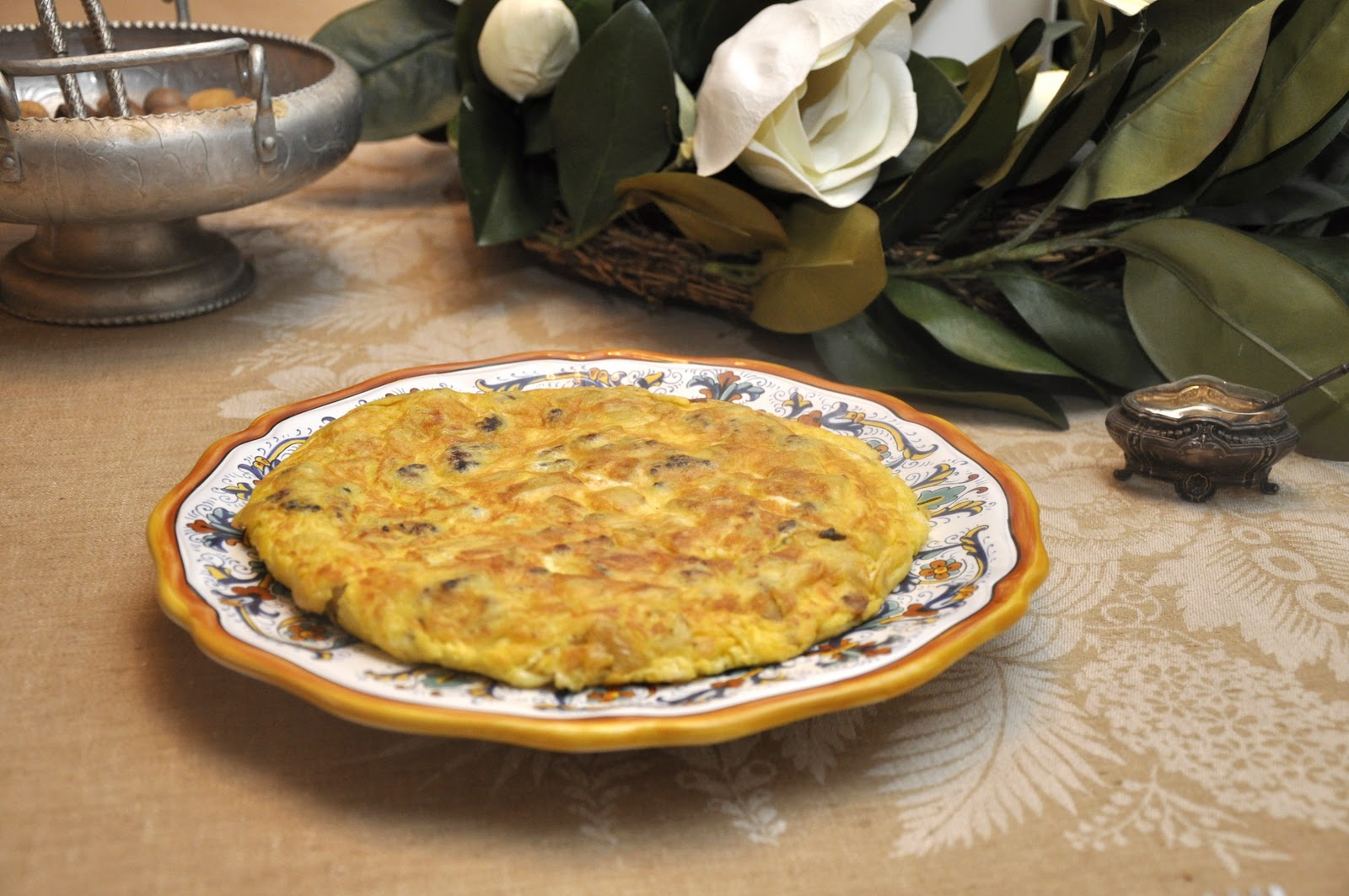
NOTES: The two-plated flipping technique is one that I  really like, since it is basically foolproof. But if you like, you can use a single plate. You take the plate and cover the skillet, and then flip as described above. This saves you cleaning another plate but be careful, as the skillet is obviously going to be very hot.

Another technique is to run the skillet under a broiler for a few minutes, until the eggs are set and the top is nicely browned. This is even more foolproof than the two-plate flipping method, but don't think that the frittata turns out as attractive, and since the top has not 'tasted' any olive oil, it is a bit less savory.

Finally, they sell special double-skillets with interlocking handles specially-made for making frittata. I have never used one, so I can't comment on how well it works.

The recipe is a classic one, and admits a few variations. Besides the choice of cheese (which could also run towards fontina or another creamy cheese instead of a grated one), you can, of course, achieve a lot of variety by just your choice of sausage. And you can leave out the onion if you like, or substitute shallot or, if you want to get fancy, some chopped leeks.  And some recipes will call for parboiling the potatoes before sautéing them with the onion. That's an extra step that I've never tried and, to my mind, it takes away from the peasant character of the dish. But, of course, no one is going to  stop you if you like the idea...

A frittata can be eaten warm or at room temperature. Leftover frittata is perfectly delicious, and can be used to fill a sandwich—in the old says, this was a favorite lunch of Italian workmen and field hands. A frittata is a versatile dish. It makes a lovely and light secondo, but can be a snack or antipasto, or serve as part of a buffet. The one thing it never is—at least in Italy—is breakfast. But then again, why not? 

Sunday, January 9, 2011

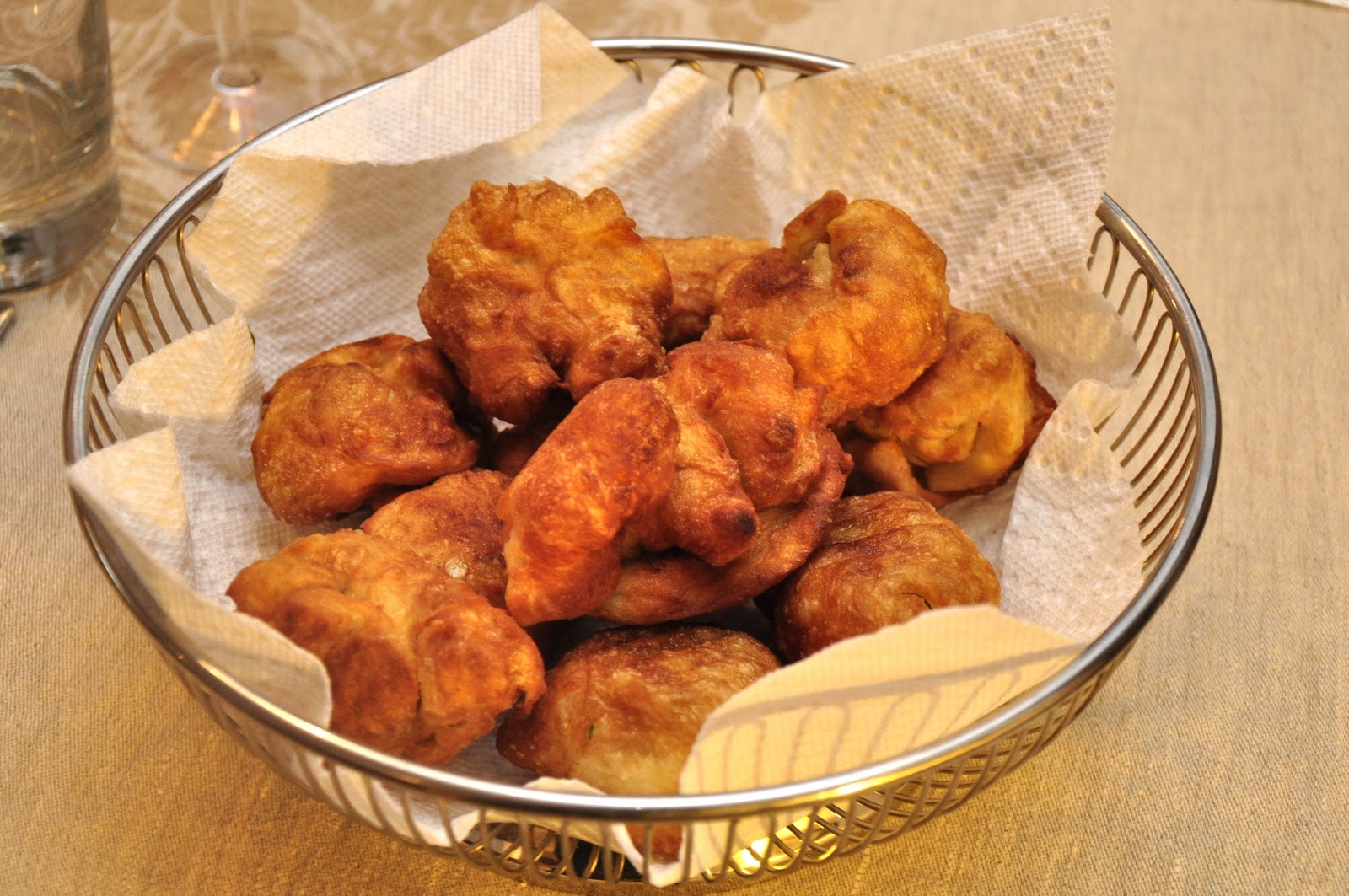
Zeppole


Zeppole are so easy to make—after all, they are basically just fried pizza dough balls—it is almost embarrassing to post about it, but since it was one of my favorite snack foods that Angelina made, it deserves pride of place on this blog. And, in any event, who doesn't like fried dough?

Zeppole can be sweet or savory. Angelina would make the savory variety. Simply make a regular batch of pizza dough (see my post on Angelina's pizza casereccia for the recipe) and, grabbing a walnut-sized ball of dough, make a well in the middle of the ball with your finger and place a single anchovy fillet inside. Then bring the sides around the fillet to cover the well and form a nice ball. You may need to roll the dough around in your hands a bit to make sure the opening is well sealed. Continue in the same fashion with the rest of the dough.

Now fry them gently in olive oil, or a mix of olive and canola oil, until they are nice and golden brown on all sides. It will take no longer than five minutes or so. Regulate the temperature so they do not brown too quickly, before the insides have a chance to cook. They will swell up as they fry, which is exactly what you want. Drain them on paper towels or on a rack.

Zeppole are really best eaten right away, but you can keep them warm in a slow oven, on a baking rack placed over a cookie sheet, or even reheat them later. They will lose a bit of their crispiness but none of their goodness.

NOTES: There seems to be some confusion, let's call it, about the name these little guys. That's not surprising, since it is common in Italian cooking, which is still highly regional, for the same dish (or with slight variations) to change name from region to place to place. According to Neapolitan gastronome Jeanne Caròla Francesconi, the 'official' name for what Angelina—and many others—call zeppole is pasta cresciuta, with the name zeppole reserved for the sweet variety. Readers have told me that they would call this dish pettole, which is apparently the name given to them in Puglia and Basilicata. Other there are still other names, depending on where you go: sfingi, fritelle... Well, this being Angelina's blog, I'll keep calling them zeppole.

The more common sweet version of zeppole are usually filled with crema pasticcera or sweetened ricotta mixed with some chocolate bits, or just the dough. Sweet zeppole dusted with confectioners' sugar before serving. Of course, all kinds of other fillings, both sweet and savory, make for many variations. Without a filling, they can be shaped into rings rather than balls. Some variations are made from choux pastry and baked. But these savory, anchovy-filled fried zeppole are the ones I remember from my childhood and will always be my favorite.

Zeppole are traditionally eaten in Naples on St. Joseph's Day, March 19. In Rome a very similar fried pastry is, in fact, called bignè di san Giuseppe and eaten the same day. But apparently in other parts of Italy, such as Calabria, zeppole are traditional around New Years, which makes them timely around now. But, honestly, these are so good you won't want to limit your zeppole making to one time of year. 

A wonderful snack food, zeppole can also be used as a kind of antipasto, either alone or as part of medley of different offerings. Just remember to make enough: like potato chips, no one can eat just one!

Post-scriptum: One reader (my mother!) informs me that, yes, Angelina also made the sweet variety of zeppole, too. Funny I don't remember that too well. But then, I was an unusual child in that I didn't have a sweet tooth. I would eat sweets, of course, if there were given to me, but I didn't seek them out. Nor, apparently, did I find them all that memorable. 

Saturday, August 21, 2010

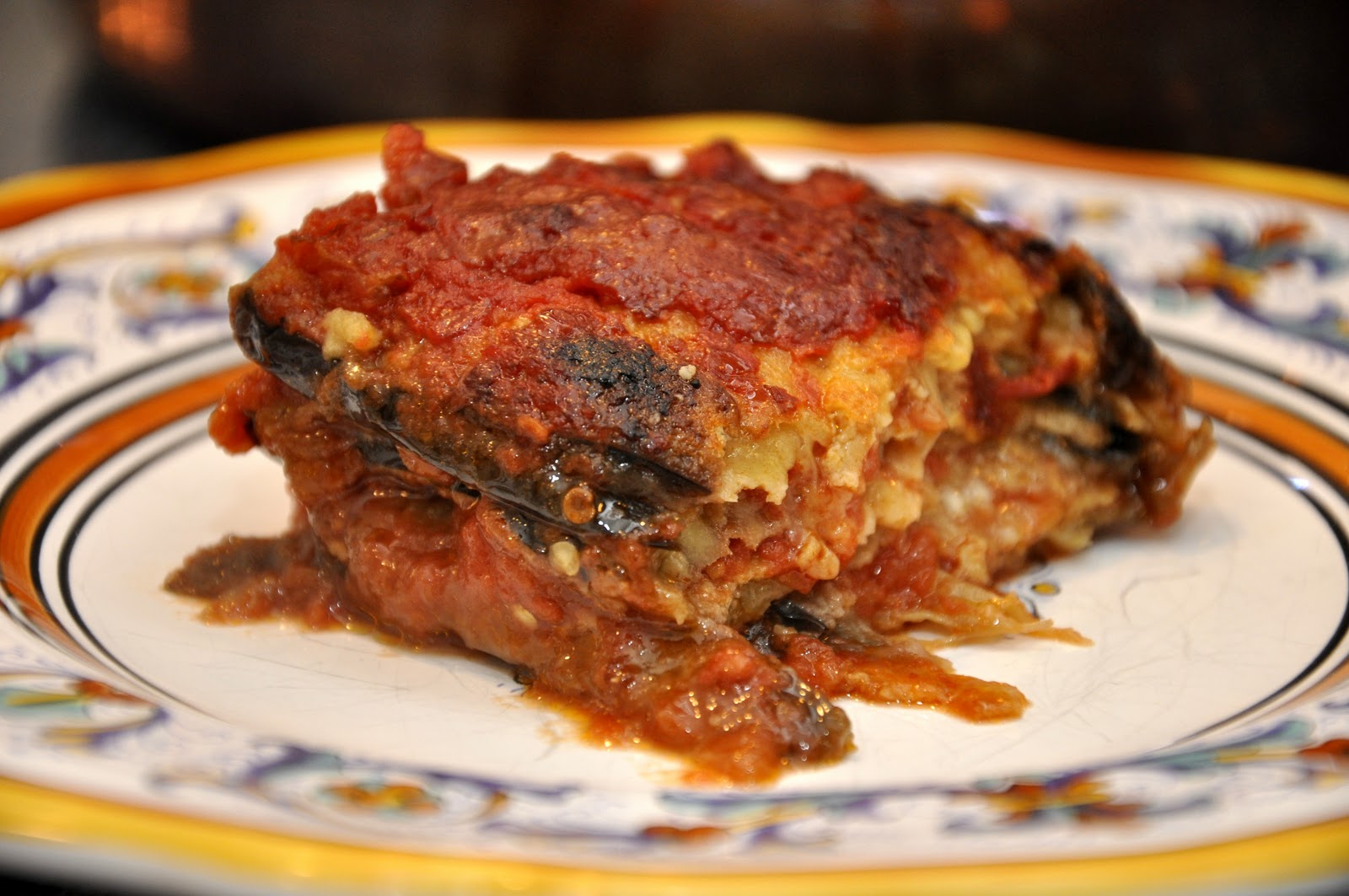
Parmigiana di melanzane


Being a lover of good food, I find it almost impossible to answer the question 'what's your favorite dish?' But if I had to, my answer would probably be eggplant parmesan--parmigiana di melanzane--the way Angelina used to make it.

This is a simple dish to make, but it involves several steps. Allow yourself a good two hours to prepare this dish. It tastes much better made ahead, so if you have the time, make it in the morning and have it for dinner or, even better, make it at your leisure the day before.

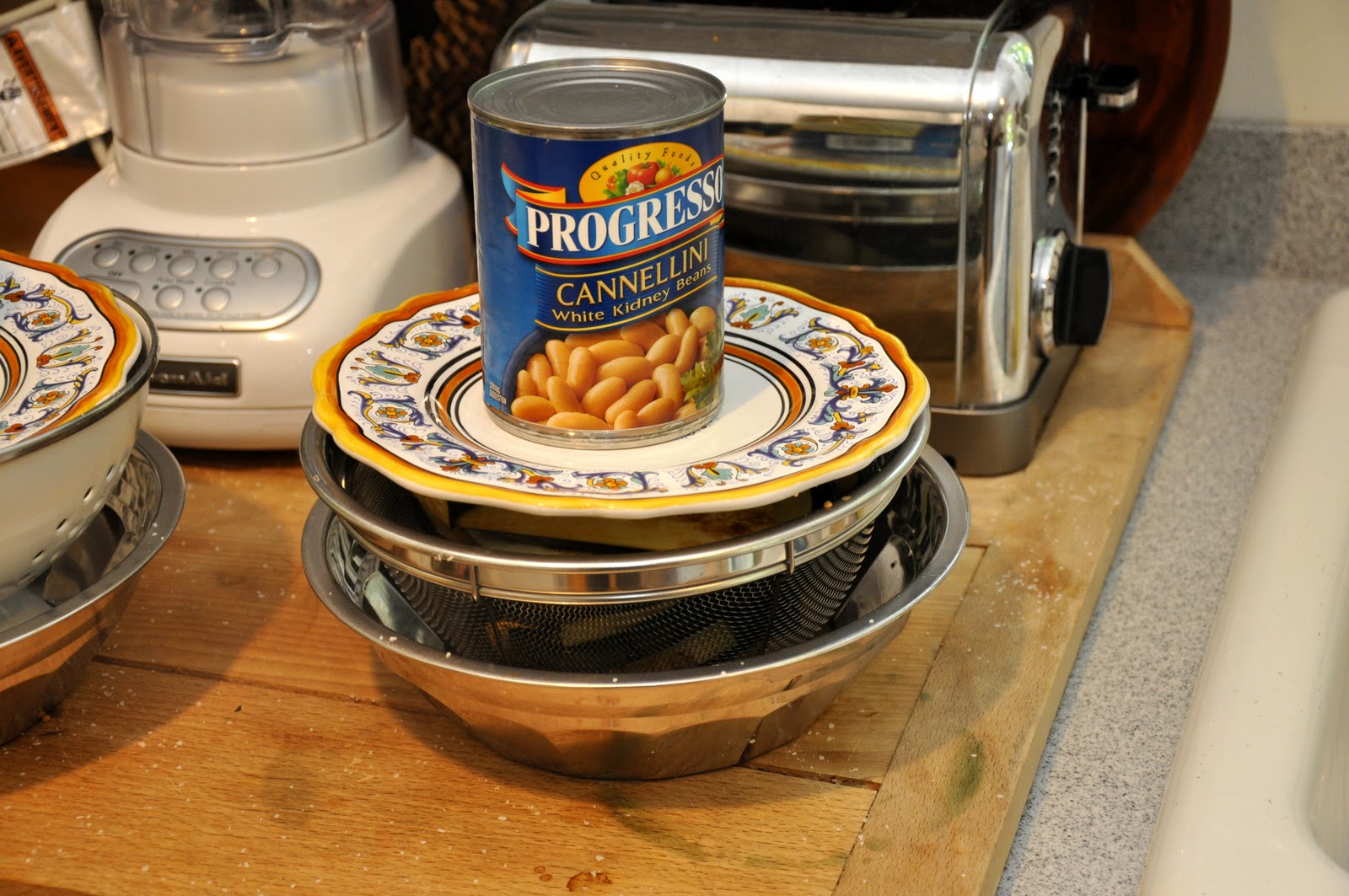
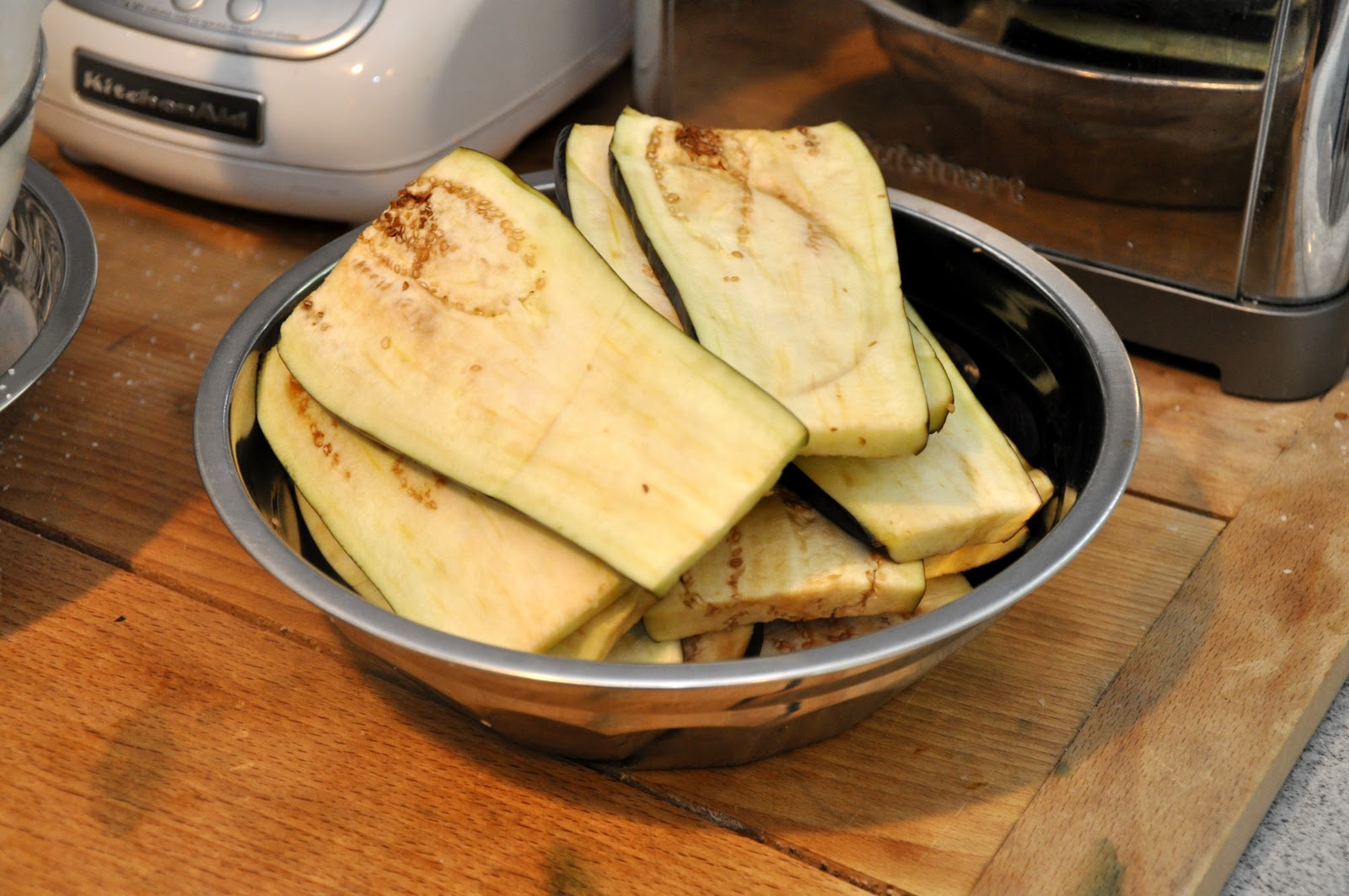
Step 1: Prepare the eggplant. You begin with eggplant, of course. For this dish, the large, purple variety is preferable; about two should do you for a good sized baking dish. You cut the eggplants into fairly thin slices. Now you should 'purge' them of their excess liquid, which can be bitter. Sprinkle the eggplant slices with salt, and then lay them in a colander laid on top of a plate. Cover the slices with a small plate on which you should place something a bit heavy like a can of beans or tomatoes. This will help press the liquid out of the eggplant. Leave them for about an hour.


You should notice a small puddle of brownish water below the colander, which you should discard, of course. Remove the slices from the colander and pat them dry.


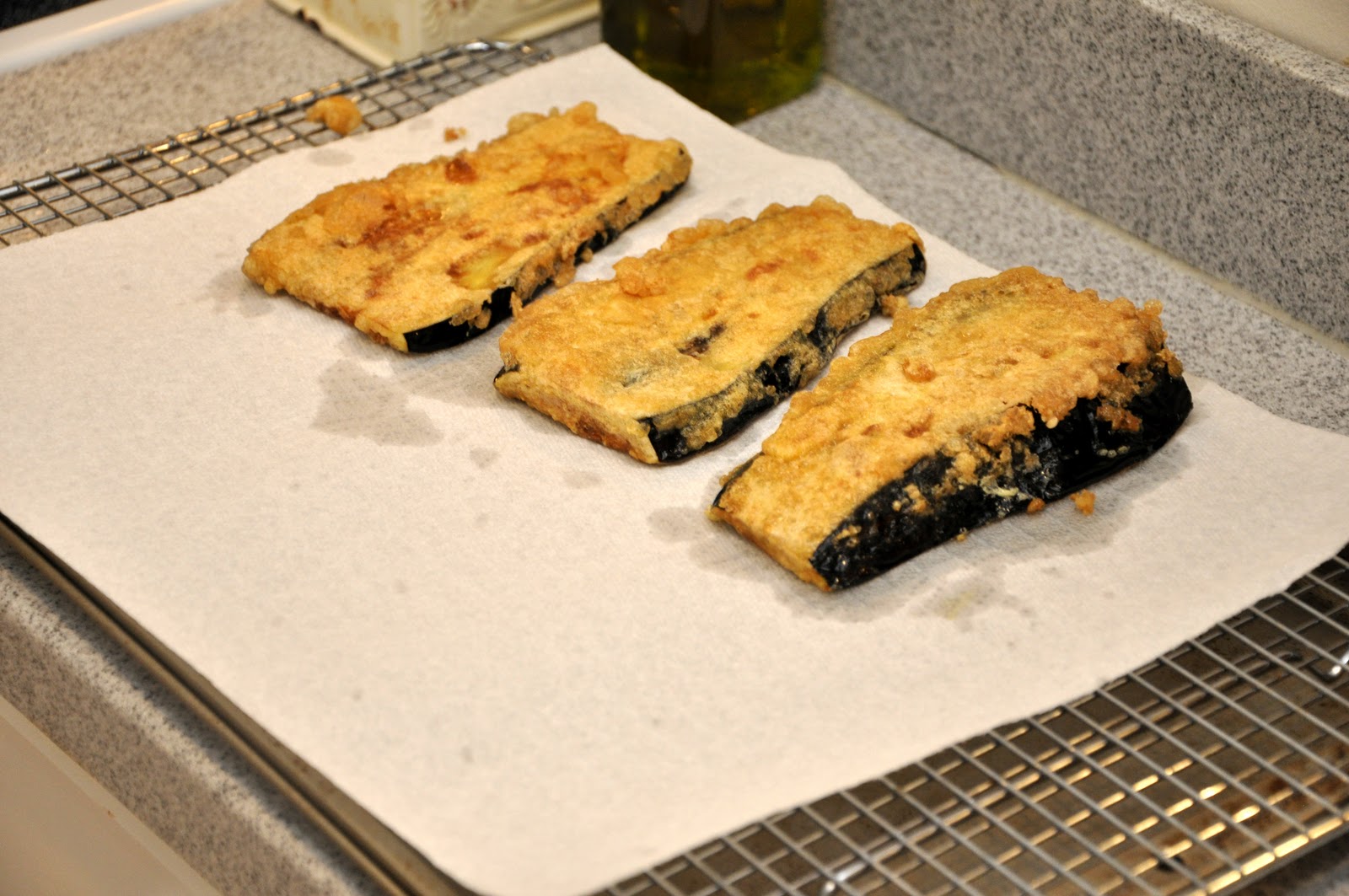
Step 2: Fry the eggplant. Now you dip the eggplant slices in flour, followed by an egg and cheese 'bath' made from beaten eggs, grated pecorino cheese, finely chopped parsley, salt and pepper. Shallow fry the eggplant slices over moderate heat until they are golden brown on the outside and tender inside.


You will need to fry the eggplant slices in batches. As each batch is done, drain and set on paper towels to absorb the excess oil as you continue with the next batch. Repeat until you're done.


Step 3: Prepare the tomato sauce. While this is going on, prepare a very light tomato sauce by combining chopped tomatoes (fresh if in season, but canned tomatoes are fine), a few leaves of fresh basil, salt, chopped garlic and just a few drops of olive oil. (Some people omit the olive oil altogether since the eggplant, even after draining, can be a bit oily.) Simmer for about 15 minutes, until the tomatoes have melted into a sauce If using canned tomatoes, add a bit of water to loosen the sauce before simmering. You will want a good amount of sauce, so be sure to make a potful--you can always any extra to dress pasta.

Step 4: Prepare the cheeses. Take a large mozzarella, preferably fresh, and slice it. Grate lots of parmesan cheese, at least a cupful (you can grate it as you assemble the dish).

First layer down...
Step 5: Assemble the dish. You are now ready to assemble the dish. In a bake-and-serve pan, place a layer of the fried eggplant slices, then a bit of the tomato sauce, then a few mozzarella slices, a bit of shredded basil (optional) and grated parmesan cheese. Season. Then add another layer of eggplant and continue until you've used up your ingredients. End with tomato sauce and parmesan. (Don't put mozzarella on top, it will brown too quickly in the oven and burn.)

Ready for the oven...


Step 6: Baking. Bake in a hot oven (400 F, 200 C) for about 30 minutes, or until the dish is bubbling hot and the top a bit brown. Don't worry if it even looks a bit 'burnt' around the edges--that's normal and, to some tastes, the best part! Let the dish cool a bit before eating, at least 15 minutes. In fact, it tastes best made ahead and reheated (just a bit) before eating. It can also be eaten at room temperature. Just don't eat it piping hot, because you will miss the full, wonderful flavors!

NOTES: A friend from Naples once told me that this version of parmigiana--made with eggplant slices dipped in egg--is typical of the interior of Campania, the region where Naples is located and of which it is the capital. In fact, that's where Angelina was from, a small mountain town near Benevento. In Naples proper, this dish is made with eggplant slices that are simply lightly floured and fried. Most modern recipes you will find follow the Neapolitan method. I've tried it that way and it makes for a lighter dish. But I still like Angelina's version best! For an even lighter dish, you can brush the eggplants with olive oil and grill them instead of frying. The result is actually very nice, but you are getting pretty far from the original flavor and texture of the classic dish. They also make this dish in Sicily (in fact, the Sicilians claim the dish is theirs-see below) but without the mozzarella cheese.

If you are pressed for time, you can skip the initial 'purging' of the eggplants. As long as the eggplants are reasonably fresh, it should not make that much difference. I sometimes skip this step myself. But be aware, there is a chance that the dish will have a bitter aftertaste. And if you want an even quicker dish, instead of a tomato sauce, you can use passata di pomodoro or crushed canned tomatoes--it will cook in the oven--a drizzle un filo d'olio over each layer.

Some recipes calls for baking the dish in a moderately slow oven and for a longer period, from 45 minutes up to an hour, raising the temperature at the very end if necessary to brown the top. The advantage of this method is that you are less likely to burn the top.

This dish can play many roles in an Italian meal. It can serve as an antipasto, as part of a buffet, as a light secondo or as a piatto unico: a single-dish meal in itself. And, to be honest, I even eat it, the morning after I make it, for breakfast!

By the way, as is typical for a popular dish with many variations, there are a good number of different stories about the origins of this dish. some of them place it in or around Naples, while say the dish originated in Sicily. Despite the name, however, it is very doubtful that this dish comes from Parma. The name may refer simply to the generous use of parmgiano cheese in the dish. Some early sources say that the parmigiani were known for making layered vegetable casseroles. The Sicilians say that the name comes from  parmiciana, which the dialect word the slots in window shutters (persiane in proper Italian) since the eggplant slices lined up in the baking dish were said to resemble said shutters.

This interesting article discusses the various claims and their relative merits. If you can read Italian, Wikipedia also has an article on the dish. Both place the probable origin to Campania and to the 18th century chef and writer Vincenzo Corrado.

My sous-chef....


Eggplant Parmesan on Foodista

Sunday, August 15, 2010

Insalata di riso


Mid-August, when the temperatures climb to tropical heights, is a time when even the enthusiasm of even the most avid cook can begin to wane. Italians often turn to easily prepared dishes that need minimal or no actually cooking. Salads are an obvious choice, and rice salads are a favorite. Not only are they delicious, but they are easy to prepare, adaptable to just about whatever happens to be in the cupboard and can be easily made ahead—which makes them perfect picnic or summer buffet food.

Begin by boiling your rice al dente. It will take anywhere from 10-15 minutes to boil your rice, depending on the variety of rice you use; rice cooks more quickly when boiled in abundant water than for a risotto. Drain the rice in a colander and rinse it quickly under cold water to stop the cooking. Give it a good shake or two to get out all the water and transfer to a large mixing bowl.

Then add your choice of condiments from your pantry. My favorite is based on tuna fish, which you add to the boiled rice together with a handful of capers, some chopped gerkins and a handful of olives (green and/or black, as you prefer). I sometimes add some chopped anchovies as well. Some people add even more ingredients, usually pickled onions or pimentos, or both. Today I had some mozzarella on hand, so I chopped that into cubes and added it, too. 

Finish off with some chopped parsley for color, a good drizzling of olive oil, salt, pepper and some freshly squeezed lemon juice—just enough to 'brighten' the dish. Mix gently but well with a spatula until the ingredients are evenly mixed. (Try not to break up the tuna completely—it's nicest with little chunks here and there, I find.) You can serve the salad immediately, but it develops flavor if you let it rest for an hour or more.

Rice salad can be made as much as a day ahead—in which case, leave it in the fridge, of course, and take it out about an hour ahead so it returns to room temperature. Before serving, you may want to 'refresh' the salad with a bit more oil and lemon juice before serving.

NOTES: And unlike risotto, you can really use just about any kind of rice. Italians often use a slightly lesser grade of rice—called 'fino' rather than a 'superfino' like arborio, carnaroli or vialone nano that you would use for a risotto. These go by the names of ribe or Roma, and you can sometimes find these in specialty shops. You can also use long grained rice if you prefer. In fact, many Itailans use parboiled rice, since it holds its texture well when made ahead. Personally, I rather like sticking with a superfino.

As for measurements, I follow the 'golden rule' of 100g of raw rice per person. The amount of condiments really depends on your taste, but for 200-400g of rice I use a small to medium-sized can of tuna, plus about a handful of each of the other ingredients. Just trust your instincts.

Like pasta, there is an almost infinite variety of rice salads—and you can really just make up your own version using whatever suits your fancy. Besides this tuna-based salad, another very popular salad includes—believe it or not—sliced würstel, the German word that Italians use for those little smoked sausages otherwise known as 'hot dogs'—cubed boiled ham can substitute—usually combined with cubed pieces of swiss cheese, olives and some of those pickled vegetables. Also popular is a completely vegetarian version with mixed pickled vegetables called giardiniera. Or dress your rice with prepared seafood salad from a deli for an insalata di riso marinara. Some halved cherry tomatoes can be added to any of these varieties if you like. And all are finished off with a dressing of olive oil, salt, pepper and lemon juice.

Feel free to give full rein to your imagination and creativity. Italian cuisine has all sorts of 'rules' that Italians take very seriously even if they are often broken—but there is something about summer that makes people want to let their hair down, so why fight the urge?

Tuesday, August 3, 2010

Pomodori ripieni di riso

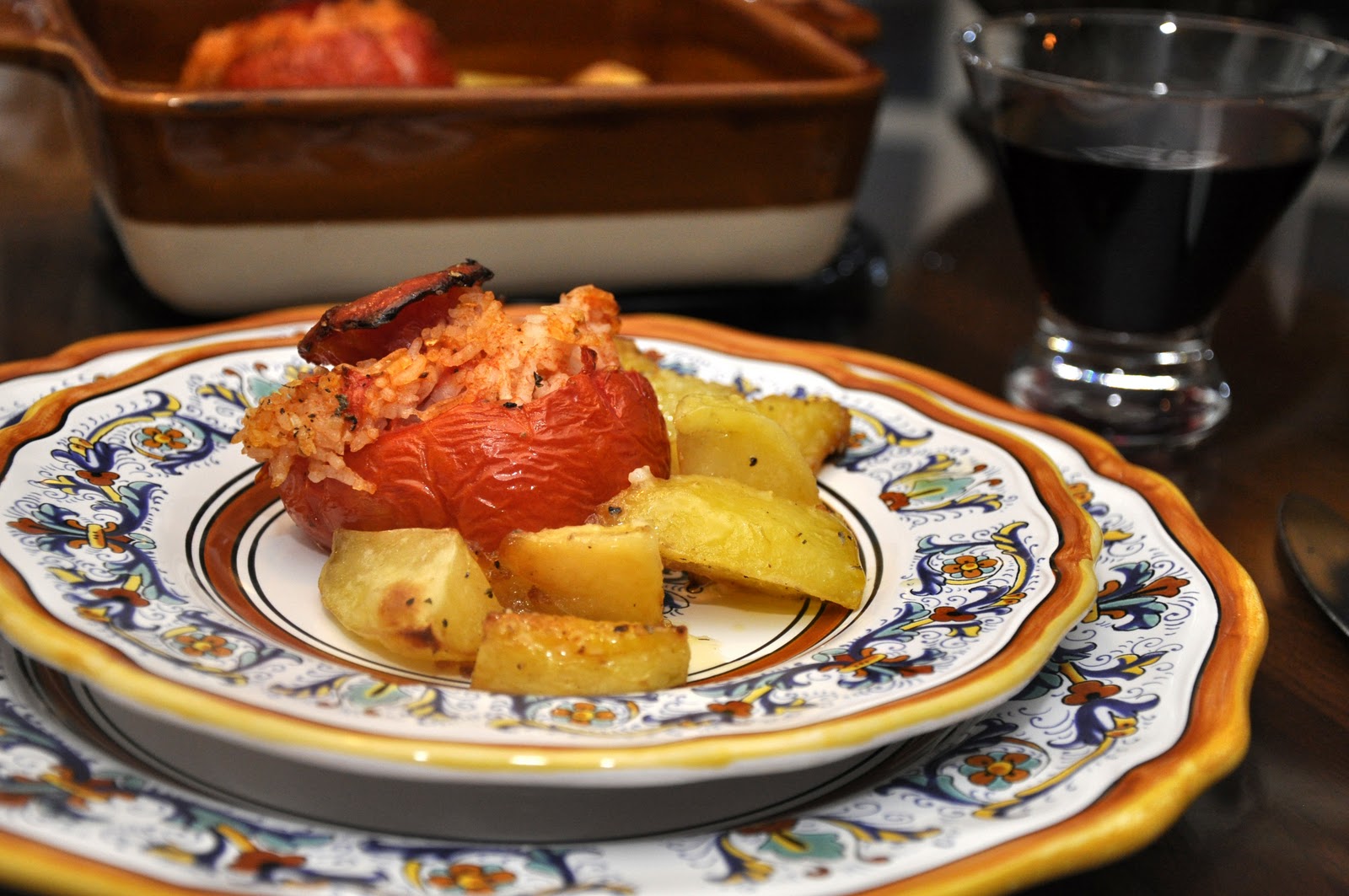
A staple of summer picnics and tavole calde, pomodori ripieni di riso, tomatoes stuffed with rice and oven roasted, make for a simple and relatively quick weekend dinner, part of a buffet or a tasty antipasto for a summer dinner for guests. Here's the recipe:

Take as many tomatoes as you have dining companions, cut off (but don't discard) the tops. Scoop out the insides of the tomatoes and chop them up, making sure you don't lose the juices. Mix the chopped up insides with some rice, which you will have parboiled until they are about half-tender. Season the rice mixture with salt, pepper, a drizzle of olive oil, just a bit of finely minced garlic and some minced herbs, typically oregano, basil and/or parsley.

Spoon the seasoned rice mixture into the insides of the tomatoes, taking care not to pack them too tightly, and place their tops back on top of the rice stuffing. Place them in a well-oiled baking pan and scatter some wedges of potato around the tomatoes. Season the dish with salt and pepper and, if you like, a sprinkling of oregano. Drizzle everything with some more olive oil. Roast in a hot oven (200C, 400F) for about 45 minutes, or until the rice and potatoes are fully cooked, the tomatoes nicely roasted—they will crinkle up and their edges will char a bit. Check on the dish from time to time while it is roasting. If it seems dry, drizzle over a bit more oil. You can also move the potatoes around so they cook evenly and are well coated with the oil.

Pomodori ripieni di riso are usually left to cool and eaten at room temperature or just slightly warm.
 

NOTES: In Rome at least, these tomatoes are invariably served with potatoes but if this is too much carb for your taste, you can omit them. Some recipes call for reserving a bit of the tomato pulp and mixing it with the potatoes so they too get some tomato flavor and a bit of color.

You can also play with the rice stuffing. As indicated, the herbs can vary with your taste. Some recipes omit the garlic, others call for some grated pecorino or parmigiano. Some add capers, olives and/or chopped anchovy, although these ingredients would change the character of the dish pretty radically and, in my humble opinion, upset the balance of flavors.
Needless to say, the success of this simple dish will depend on the quality of its ingredients, especially the tomatoes. This is really something you should save for the best, tastiest summer tomatoes you can find. The tomatoes themselves should be large enough to stuff, of course, but should not be gigantic, either, or you will wind up with too much stuffing, making for a rather stodgy dish. The tomatoes should be fully ripe, but not at all mushy, or they will disintegrate in the roasting process.

As far as the rice is concerned, the typical rice would be short-grained, but this is a forgiving recipe. You can even use leftover Chinese take-away, which is what I used tonight! Some recipes calls for adding raw rice, but in my experience this inevitably leads to a dry, chalky filling. As mentioned, it is important not to pack the stuffing too tightly or to overstuff the tomatoes; they will otherwise expand and rip open the tomatoes—not the end of the world by any means, and the tomatoes will still taste good, but you may fare una brutta figura (make a bad impression) if company is coming…

Sunday, June 28, 2009

Insalata Caprese

It's a warm, wonderful Summer-like day, and I didn't feel like doing any 'real' cooking (yes, even I feel lazy about cooking sometimes) so I just threw together--almost literally-- a typical summertime salad that we're all familiar with: alternating slices of tomato and mozzarella, some fresh basil leaves, salt and a generous amount of fruity olive oil poured over the top. (Some people add a bit of vinegar--but don't do it, it overpowers the delicate flavor of the mozzarella.) This is a 'composed' salad like the salade nicoise, meaning you do not toss the ingredients but arrange them on a plate.

Italians call this an insalata caprese, or just caprese for short, after the island of Capri, off the Amalfi coast in the southern Italian region of Campania. Of course, mozzarella comes from the Campania region, as do the best tomatoes in Italy. But apparently it is wrong to think that this salad actually comes from Capri. Here's a story I found on the internet:

"Probably like many people, I assumed (apparently incorrectly) that insalata caprese originated on Capri, or at least nearby in Campania, since the ingredients- tomatoes, mozzarella di bufala and basilico are so good there. In the latest issue of Gambero Rosso magazine, there is a little piece about the origins of the salad whereby a native of Capri, Constantino Moffa, who worked as a maitre d' in a Swiss hotel had it for himself so often, and people took to it asking for what the person from Capri had. It made itself to the menu, and the rest is history."

NOTE: This is an extremely easy dish to make, obviously, but it can be difficult to find the right ingredients. Unless you use top quality ingredients, you will end up with a dish that is almost entirely uninteresting, which is why I never order this in a restaurant (outside of Italy, at least). You need the best quality olive oil--and only the deep green fruity kind, from southern Italy, will do. You also need ripe, deep red, tasty tomatoes, which is another challenge. In the US, you'll need to either grow them yourself or buy them from a farmer's market. Tomatoes are in season in the summer, as is basil, which is why this is a summer salad. I wouldn't even attempt to eat this out of season. But yesterday I found some Mexican tomatoes in Whole Foods and, in fact, they were not half bad. And, although unorthodox, you can use cherry tomatoes, which tend to have more flavor.

And, finally, last but definitely not least, you need top quality fresh mozzarella. This is perhaps the biggest challenge of all. Even in Italy, it can be difficult to find top quality mozzarella outside of its production zone, which extends from Campania up through the southern part of Lazio. We had some friends that live in Latina, not far from Rome but within the production zone, and they would serve the most wonderful mozzarella I had ever tasted, better than anything I could find in Rome, just a few kilometers away. Outside Italy, of course, things get even more challenging. In the US, the most common type of "mozzarella"--although I hesitate to even call it by that name--is the kind that is packed in plastic wrap. It has nothing to do with real mozzarella. You can use it for certain cooking tasks, but it is too tasteless and rubbery to eat raw. You can buy imported mozzarella but somehow more often than not, the texture is not quite right. Rather than being rubbery, the texture is too soft. Best quality mozzarella has a texture that is hard to describe, neither hard nor soft, almost 'spongy', and oozing with milk. Probably the best bet for those in the US are some of the new artisanal cheesemakers here, who make a decent imitation. In New York, the best place I know of for mozzarella is Joe's Diary on Houston Street. Haven't been there in years, but back in the day they made superb stuff on the premises. Their smoked mozzarella was to die for!

Mozzarella comes in two basic types: the 'real' mozzarella is made from the milk of water buffalo, and is called mozzarella di bufala and cow's milk mozzarella, called fior di latte. If you can find the real kind, by all means use it for this dish. But I find that quality is more important. Mozzarella can be smoked, and I love the smoked variety when it is well made. Close to mozzarella, and very popular in Rome, is scamorza, which is also smoked. Unusual for cheese, it is usually not eaten raw but split in two and browned over a grill or on a griddle, either plain or topped with a slice of prosciutto or anchovies, it's great.

Post-scriptum: A friend of mine who works at the Italian embassy recently told me that Costco carries fresh mozzarella flown directly from Caserta. Well, I tried it and, indeed, it is very, very good. The brand is fattorie Garofalo.

Insalata Caprese on Foodista

Saturday, June 27, 2009

Fagioli e tonno


Here's a dish that really is just about as simple as you can get. If you can open a can, you can can make this salad: mix one can of cannellini beans, washed and well drained, with one can of tuna packed in olive oil. Add chopped onion or scallion, parsley, salt, pepper, the juice of half a lemon and a generous amount of best quality olive oil, enough to coat the beans well. Toss well. If it's a little dry, add more oil. Adjust for seasoning.

You can serve this immediately or make ahead.

NOTES: The choice of tuna is pretty crucial here. You want tuna packed in olive oil. If you are feeling extravagant, there are some imported tuna of the ventresca type--fillets of tuna bell--that are wonderful but quite expensive. Otherwise, Cento, Progresso, Ortiz and Genova brands are all fine choices. If you can find Sicilian yellow fin tuna, which is wonderful, and if you're willing to shell out $6 a can (plus shipping), that's the best choice of all.

Of course, the 'real' recipe calls for dried cannellini beans that you will have soaked and cooked yourself. For special occasions, it's the best, but for an everyday quick meal, canned beans will do just fine. Be sure to wash off the can juice, however, as it will otherwise give the salad an off taste. (You should do that whenever you use canned beans, btw.) I've never tried it, but I have to suppose that other beans would make for an interesting variation, chickpeas and tuna being a fairly common one in Italy. I sometimes add chopped tomato, in season, which makes for a pleasant change.

The traditional recipe, which is originally from Tuscany, calls for red onions (which are typical of Tuscan cooking). They are your first and most authentic choice, but the mild flavor of white onions is also quite nice. Scallions aren't bad either (and that's what we had on hand tonight). You can use regular yellow onions in a pinch, but their taste is a bit too harsh to eat raw--soak them in cold water to remove some of the harshness and pat dry before adding them to the salad.

Fagioli e tonno is generally considered an antipasto, but we often have it as a main course for a light supper in warm weather. You can serve it just as is or over a bed of lettuce. It also is a nice component in a buffet.